TIFF Report IV: Batting Clean-Up
Reviews of "Babies," "Bucking Fastard," "Edward Said: Between Worlds," "Everybody Wants to F*ck Me," "The Face of Horror," "Love of Your Life," "Possible Love," "The Secret Lives of Baba Segi's Wives," "A Talent for Murder," "Union Town"

I landed back in Boston from the Toronto Film Festival Tuesday night after seeing 21 movies in six days, which, honestly, is a sign I’m slowing down. Midnight screenings? That’s a young person’s game when you get home at 2 a.m., write for an hour, sleep for three and get up at 6 for an 8 a.m. screening. Grandpa needs his beauty rest.
Admittedly, seeing so many films in so short a time-period is slightly hazardous to one’s mental state, but it’s arguably more injurious to the movies themselves, especially by Day 5 when titles and scenes and actors start melting into each other like s’mores left too close to a campfire. And it may be unfair to you readers, since Festival Brain – the high that comes from seeing movies with their very first audiences and their creators in attendance – is a real thing. You might be safer docking a half-star from any of the festival reviews I’ve been posting over the last week; I might do the same after getting a second look in lower latitudes
On the other hand, maybe not, because an event like TIFF reminds that I got into the criticking business not to be critical but because I simply love the damn things – love sitting in the dark watching doors open onto other worlds and different sensibilities. (And to simply go on vacation: Pedro Almodóvar’s “Bitter Christmas” had everyone at the screening mentally making plane reservations for the volcanic island of Lanzarote, and “Wild Horse Nine” whisked audiences off to Rapa Nui along with Sam Rockwell and John Malkovich.) A film festival is where the faithful gather – not just my fellow monks in the business (even if seeing critic friends remains one of the best parts of what amounts to a niche industry convention), but all the Sunday worshipers in the audience as well. I went to this TIFF 2026 thinking it might be my last; I left remembering why I liked to go in the first place.
Following are thumbnail reviews, in alphabetical order, of everything I saw that hasn’t already been covered in earlier posts. There were plenty of movies I wanted to see but didn’t: Alex Gibney’s four-hour Elon Musk documentary, Jesse Eisenberg’s “The Debut,” Chris Rock’s “Misty Green,” the buzzed-about “Club Kid,” the new Mike Leigh – but you pays your money and you takes your chances. I've included trailers where I can and a few TIFF Q&As as well.
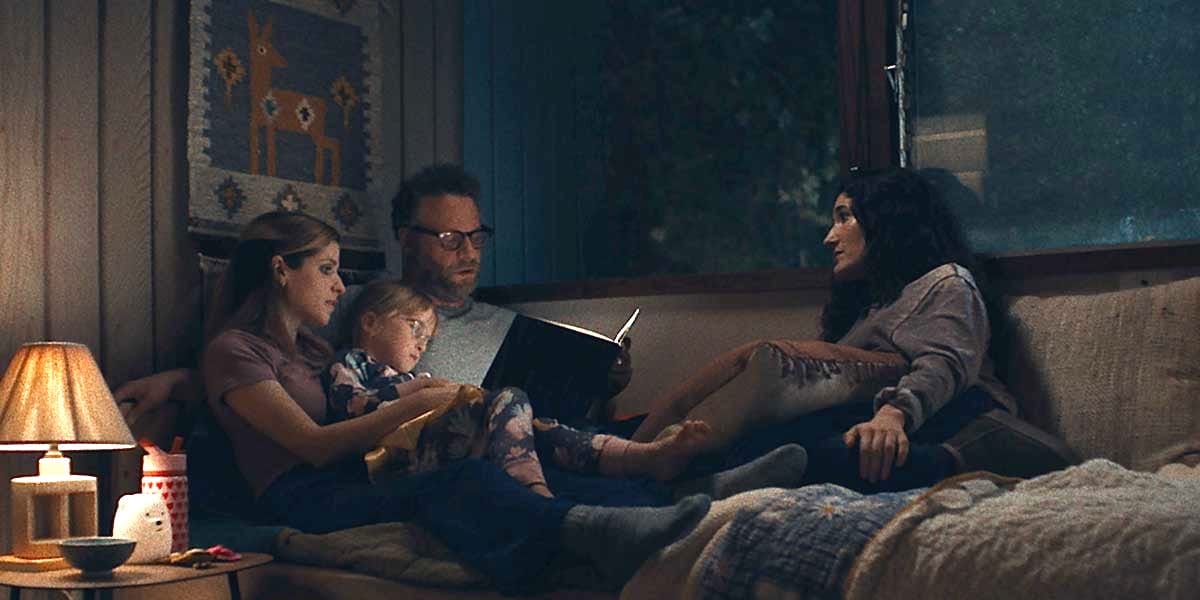
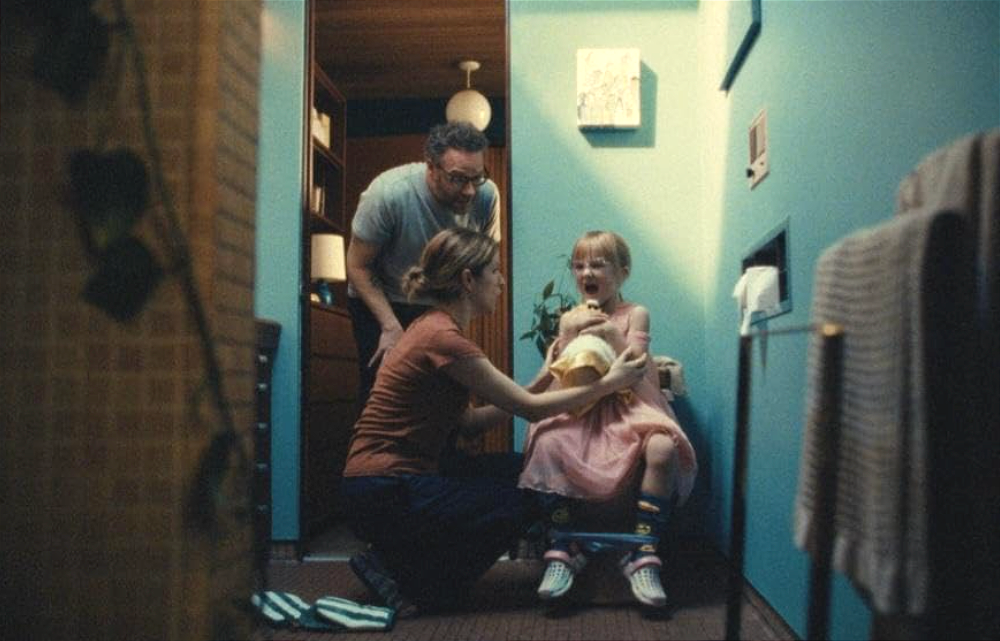
“Babies” (⭐ ⭐ ⭐) – Frisky, surprisingly ruminative comedy about a long-established L.A. couple deciding whether they want to have children, as they’re the last of their friends to spawn. The couple is played by Seth Rogen and Anna Kendrick, and A) I will watch Kendrick in anything and so should you, and B) she and Rogen make a delightful pair, prickly and quick. Rogen’s wife, Lauren Miller Rogen, wrote and directed, and the air of bougie California privilege is only slightly examined: The décor is straight-up Nancy Meyers, and I wish Issa Rae had more to do than be the heroine’s pregnant Black friend. But the stakes feel unexpectedly real, perhaps because the filmmaker is pulling from her own experiences. Funny and wiser than you might expect – and maybe not quite as wise as it thinks. In any event, recommended. (Note: I happened to be sitting two rows behind Kendrick as she watched the film, and I wondered, as I often do, what goes through an actor’s head when they see themselves on the big screen. Disassociation? All the choices they didn’t make? What they had for lunch on the set that day? Kendrick maintained a poker face throughout, so your guess is as good as mine.)
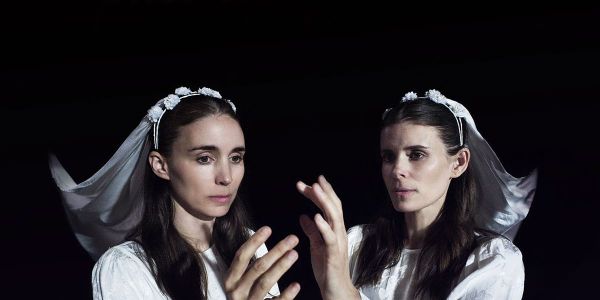
“Bucking Fastard” (⭐ ⭐ ⭐) – A Werner Herzog film dedicated to the late David Lynch, this has the feel of a visionary artist trying on another man’s weird. Which is not necessarily a bad thing. A throwback to Herzog’s most inscrutable early work (“Even Dwarves Started Small,” “Fata Morgana”), it stars sisters Rooney and Kate Mara as sisters Jean and Joan Holbrooke, who dress alike, speak in precise unison and are doubly in love with the roué next door (Orlando Bloom, appropriately dissolute). The movie starts in a courtroom and ends in a cave; in between it hops from one loosely tethered set piece to the next, following a logic only the filmmaker can discern. The Maras are phenomenal, with Joan (a spooky Rooney) and Jean (a peevish Kate) locked in verbal and emotional sync like the Hilton sisters joined at the heart. A genuine curio for fans of the director and devotees of the strange; others proceed with caution.
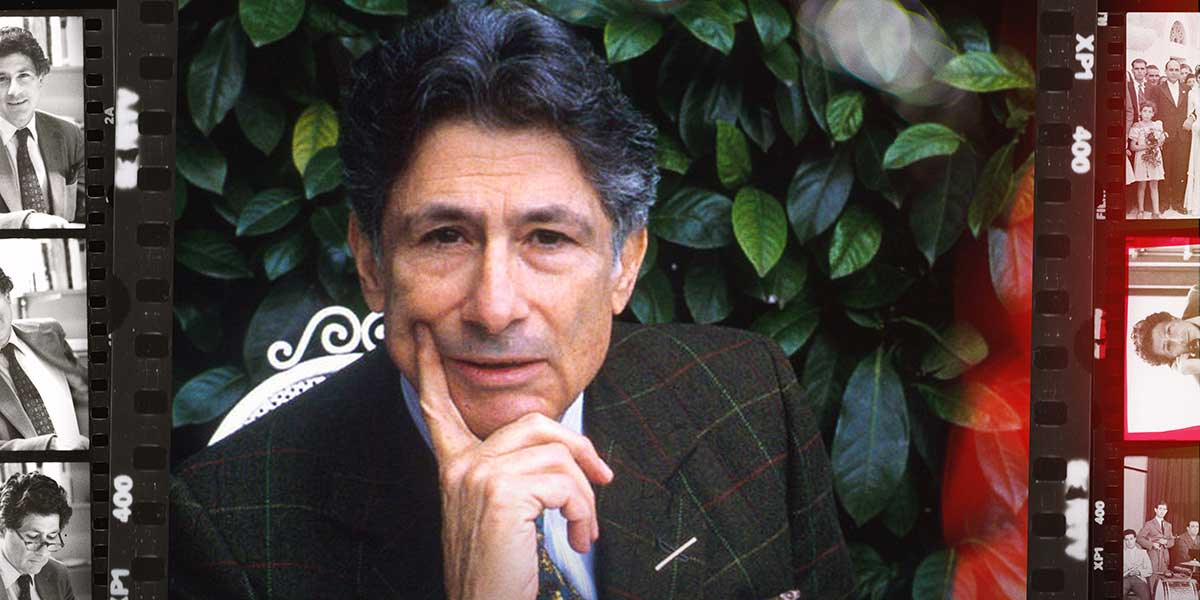
“Edward Said: Between Worlds” (⭐ ⭐ ⭐ 1/2) – Since I’m coincidentally and belatedly in the middle of reading “Orientalism,” Said’s foundational work of cultural/historical criticism, I had a vested interest in seeing Maiken Baird’s documentary. The movie focuses on Said’s life rather than his work, but you could argue that as a Palestinian public intellectual in America, his life was his work. Images and home movies from Said’s childhood before the Nakba are intensely moving as a glimpse of a vanished world, but it’s the four decades of the writer’s media appearances on cable news debates and chat shows, in classrooms and lecture halls that give “Between Worlds” a voice – Said’s voice. A movie that makes a case for its subject's legacy with as much force and clarity as Raoul Peck’s James Baldwin doc “I Am Not Your Negro.” (Seeking US distribution.)

“Everybody Wants to F*ck Me” (⭐ ⭐) – Oh, dear. What begins as a sprightly comedy about a cheeky London chappie with a carefully curated nice-guy persona slowly morphs into a horror movie about the perfidy of men who don’t even know they’re predatory. Or is it a cautionary tale about “Me Too” feminism gone too far? Your guess is as good as mine. Jonathan Schey’s feature writing-directing debut plays like a codicil to Emerald Fennell’s “Promising Young Woman” and/or a defensive male response to it, and the tonal wobbliness ultimately brings the movie crashing down like a pile of Jenga blocks. A shame, really, since Taron Egerton gives a charming and fully committed performance as a ladies’ man who can’t understand why every woman suddenly wants to devour him, sexually and otherwise. He deserves a movie that puts him over as a major star. This isn’t it. (Seeking US distribution.)

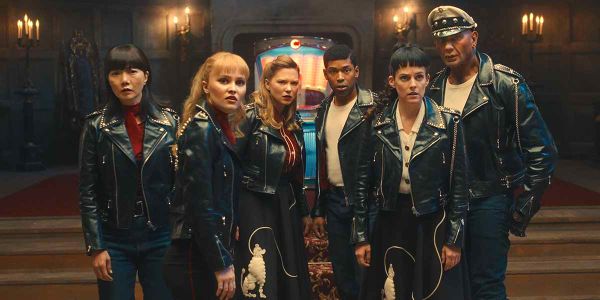
“The Face of Horror” (⭐ ⭐ ⭐) – Writer-director Anna Biller made a splash ten years ago with “The Love Witch,” a delightfully bonkers midnight movie that straddled the line between genre pastiche and feminist deconstruction, and she returns with a slightly more obvious version of same, this time with knights and damsels and a deep bow toward 1960s Hammer horror. The knights are homicidal prats (led by Jonah Hauer-King, doing a devilish turn on his role as the prince in 2023’s live-action “The Little Mermaid”) and the damsels are alternately naïve (Kristine Froseth), pragmatic (Ellie Bamber) and scheming (Bella Heathcote). What sounds didactic is ripely funny and a good deal more than B-movie parody; Miller buries her social critique beneath layers of Technicolor cheese and schlocky horror effects, but it’s there. Adapted from the legendary 1825 Japanese ghost story/Kabuki play “Yotsuya Kaidan,” if you’re keeping notes. (US theatrical release TBA.)

“Love of Your Life” (⭐ ⭐ ⭐) – A four-hanky weeper that gives Margaret Qualley one of her most serious roles to date, and I’m not entirely convinced that’s a good thing. Written by Julia Cox (“Nyad”) and directed by the Oscar-nominated cinematographer-turned-director Rachel Morrison (“Mudbound,” “The Fire Inside”), it casts the star as Maya, a young Boston nurse who falls in love with the winsome Charlie (Gabriel Basso) only to suddenly find herself without him. Years of grief, reckless hedonism and gorgeously-shot travels through Portugal follow, with Aaron Pierre sympathetic as a fellow mourner and possible new love. To its credit, the movie is more concerned with the inchoate emotions coursing beneath the heroine’s skin than in the world around her, but Qualley’s greatest gift as an actress may be her deadpan sense of mischief, and that renders Maya’s interior journey murkier than it could or should be. Maybe the star is miscast or maybe I’m just a cold-hearted bastard; the audience around me sobbed fulsomely throughout. Bonus: Morrison puts Boston onscreen with intelligence and rare geographical logic, but she’s a Cambridge kid, so it makes sense. (In theaters October 7, on Netflix October 14.)

“Possible Love” (⭐ ⭐ ⭐ 1/2) – Any new film from the Korean master Lee Chang-dong (“Poetry,” “Burning”) is an occasion, and this one plays as a subtler, more haunting variation on the class-war games of Bong Joon-ho’s “Parasite,” with which it shares actress Cho Yeo-jeong. She’s cast as an upper middle class documentary filmmaker, married to a wealthy VC bro (Zo In-Sung), who focuses her camera on a working-class couple traumatized by a labor strike in which the husband (Lee regular Sul Kyung-gu) was beaten into a coma by police. If the theme of political media exploitation in the guise of personal friendship is somewhat more concrete than this director’s usual concerns, he dramatizes it with an empathy and insight that can take your breath away; one scene late in the film drew audible gasps from the audience at my screening. Chief laurels go to Jeon Do-yeon as the working-class wife, who grows before our eyes from an insecure chatterbox to a woman of immense strength and dignity. (Don’t ask me what the title means, though; I have no idea.) (In theaters October 23, on Amazon November 6.)
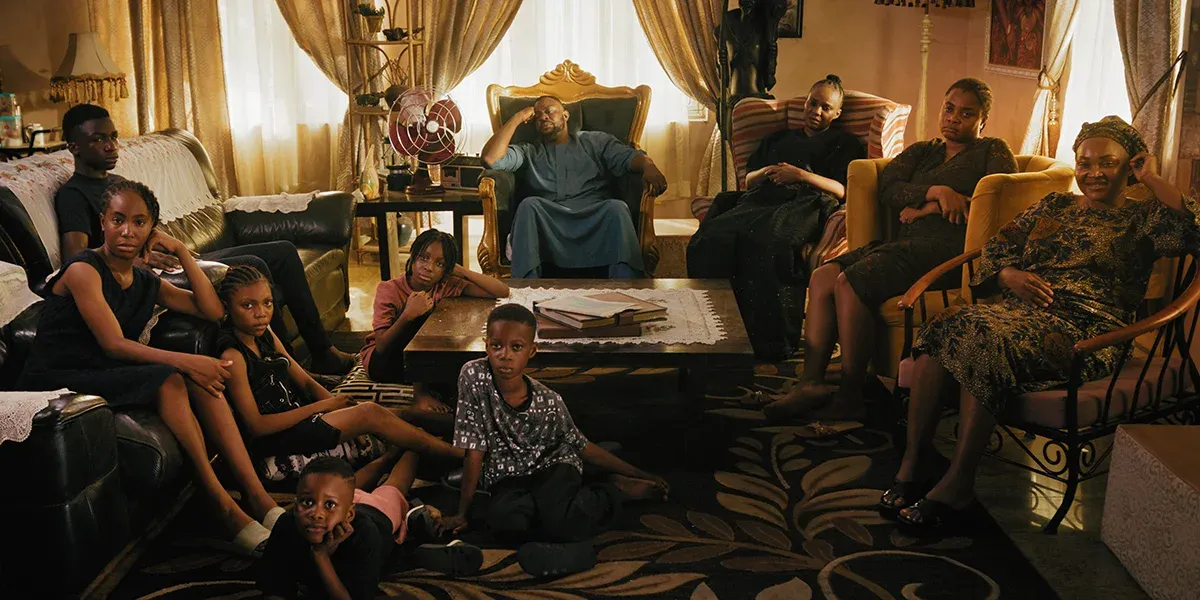
“The Secret Lives of Baba Segi’s Wives” (⭐ ⭐ ⭐) – I mentioned in an earlier post that I fled after 30 minutes or so from a particularly awful British comedy-drama; this Nigerian melodrama is what I fled into. The filmmaking and storytelling may seem soapy by Hollywood standards but it’s high-end for Nollywood and quite daring at that, dealing with rape, abortion, polygamy, patriarchy and other touchy matters. Omowunmi Dada plays the college-educated new wife of a preening Lagos construction magnate (Odunlade Adekola), whose three other wives (Iyabo Ojo, Mercy Aigbe, Bimbo Ademoye) immediately set about scheming to get rid of her; their own tragic backstories are revealed in flashback. Broad in the telling and pointed in its observations, Daniel Orahi’s film is a window on a society and a continental filmmaking hub of which I and (I assume) most US viewers know little. Think a Tyler Perry movie set in West Africa, and you’re part of the way there. (No US release set, but this may show up among the Nollywood offerings on Netflix in 2027.)
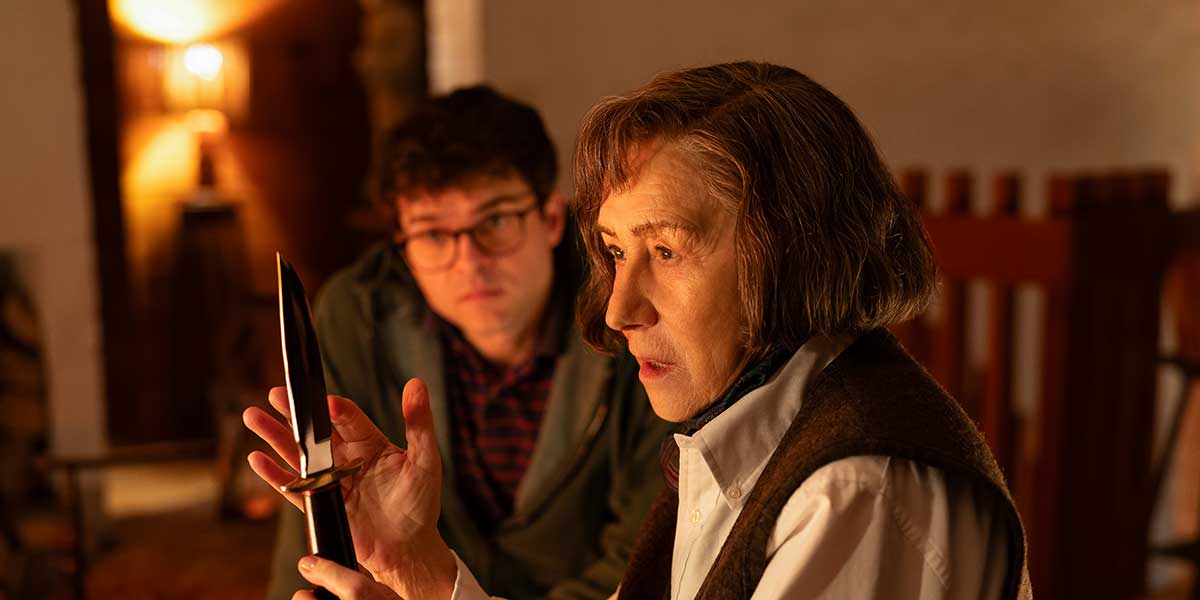
”A Talent for Murder” (⭐ ⭐ ⭐) – Anton Corbijn (“Control”) brings Joanna Murray-Smith’s stage play “Switzerland” to cinematic life with the visual panache you’d expect from a celebrity photographer turned director. Even better, Helen Mirren is note-perfect – nasty, sly, manipulative – as the aging Patricia Highsmith in this meta-meta-movie about the reclusive author, a seemingly naïve young book editor (Alden Ehrenreich) and the possibility of a sixth book in Highsmith’s celebrated “Ripley” series. The two feint and parry in luxe settings amidst the Swiss Alps, Highsmith ensconced in a modernist hillside chalet surrounded by antique guns and stilettoes while the agent regularly descends to the village to romance a wealthy visiting American (Olivia Cooke). Meanwhile, the fictional narrative on which the two end up collaborating has Ripley (also Ehrenreich) manipulating an heiress (Cooke) out of her fortune with a touch of homicide or two. If that sounds confusing, it is, but it’s also coolly entertaining until a final twist causes the movie to disappear up its own hindquarters. Worth it for the performances and for the way Corbijn and company capture Highsmith’s gift for the urbanity of evil. (In theaters October 23.)
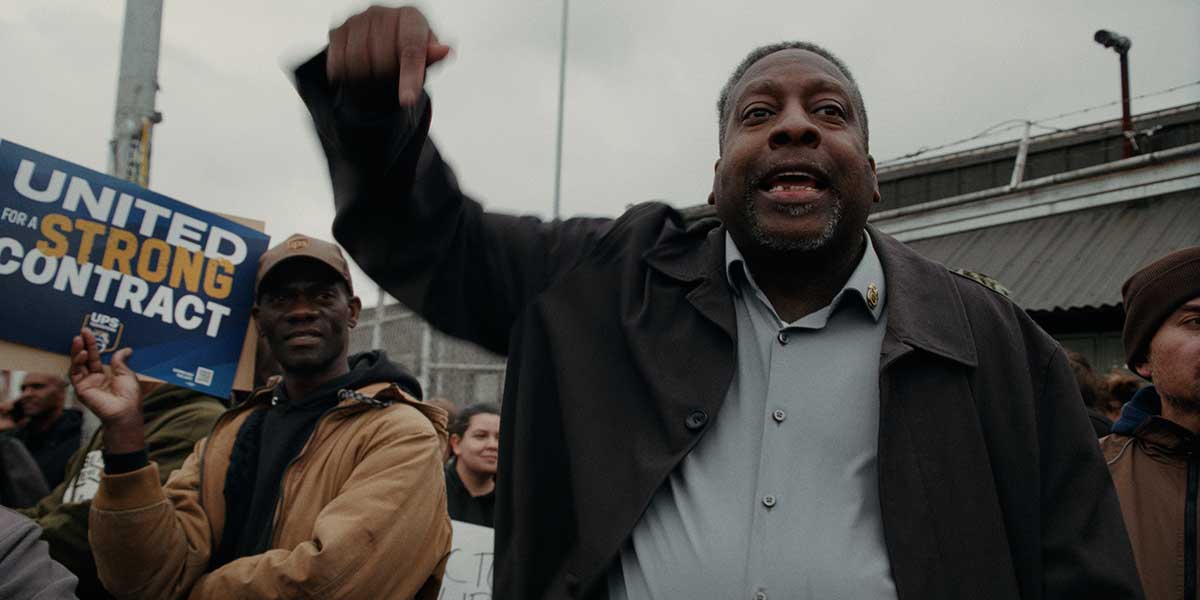
“Union Town” (⭐ ⭐ ⭐ 1/2) Documentarian Barbara Kopple returns for the third time to her great theme, the struggle of the American working class to find solidarity and leverage in a system determined to keep them powerless. Where “Harlan County, U.S.A.” (1976) brought the director’s cameras into the brutal fray of the 1973 Brookside Strike by coal miners against the Duke Power Company, and “American Dream” (1990) followed the 1985-86 strike by meatpacking workers at Hormel Foods, “Union Town” throws a wider net, covering the struggles of New York City Amazon workers, UPS drivers and DoorDash delivery guys to unionize in an era where tech oligarchs hold sway and the people who bring us our food and packages are increasingly invisible. That tripartite structure arguably blunts the film’s impact, but it also shows an inspirational army of individuals fighting uphill for a livable existence. “Harlan County” and “American Dream” both won Oscars; here’s hoping for a hat trick. (Release plans TBA.)
We now return you to your regular Watch List.
I realize it's hard to comment on movies you haven't seen, but if you have any thoughts, here's where to put them.
You can read the Watch List for free (much of it), but I don't do it for free. Becoming a paid subscriber helps me keep providing you with good movies to see, cultural commentary, subscriber-only extras and various thoughts to chew on. Plus you can talk back and give me what-for.