What to Watch: "Wicker," "Fjord" & more
Plus: A farewell to an actor, a knight and a fine human being; streaming tips and last-chance recommendations.

Happy Friday. Did you vote? Will you vote? Please vote. I'd like to start getting my country back. Thank you.
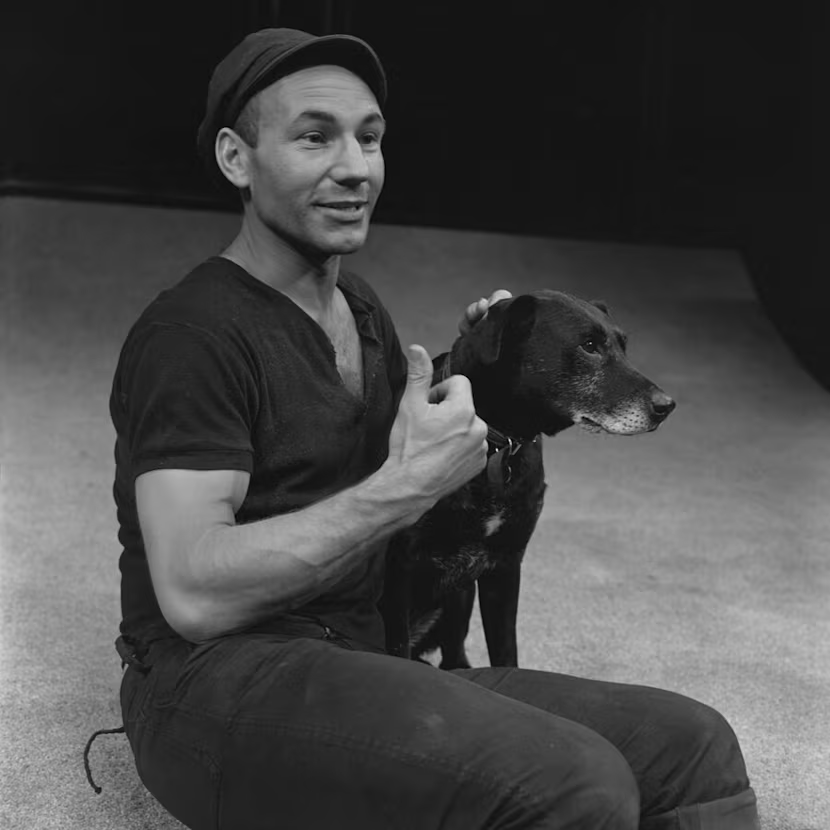
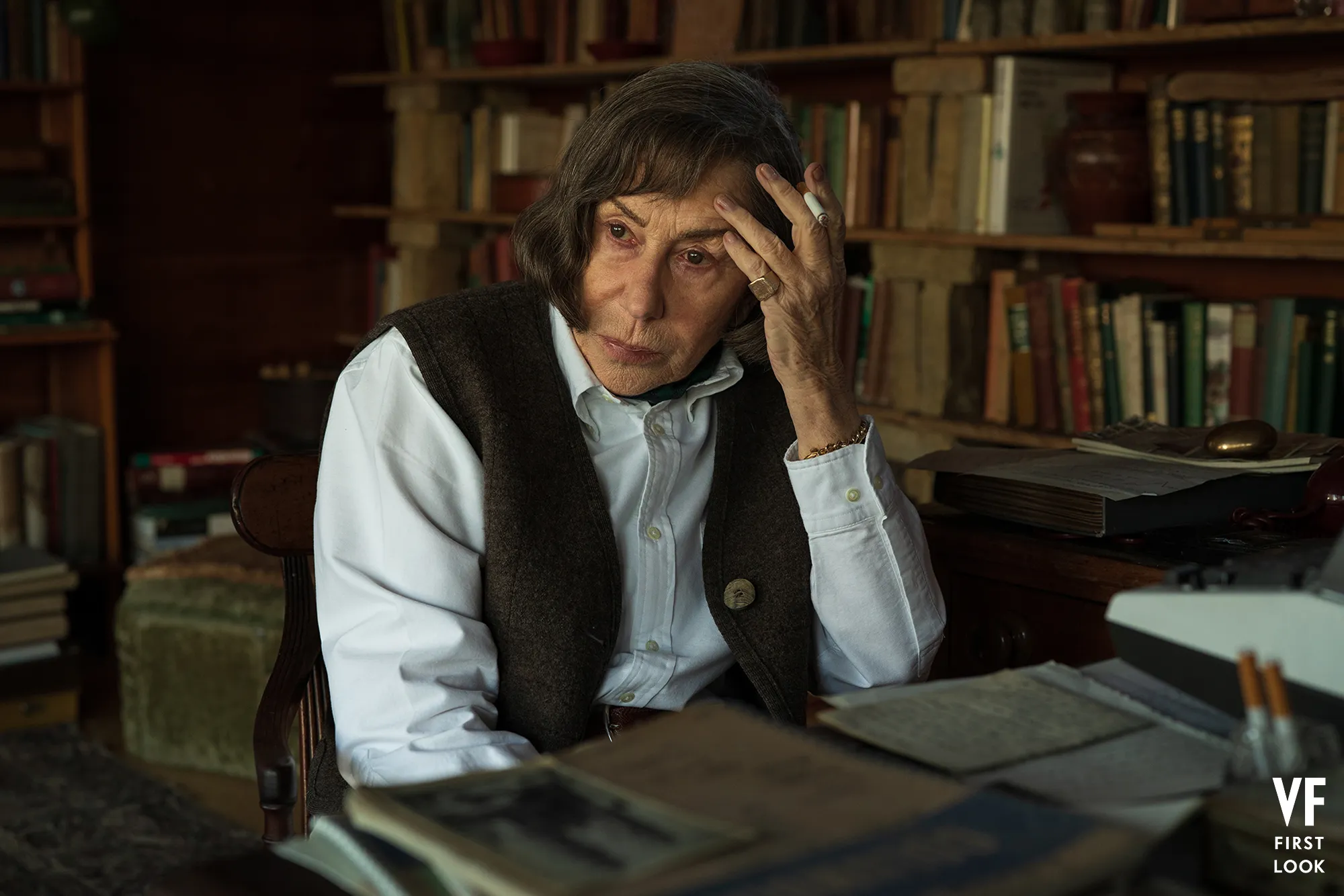
Patrick Stewart 1940-2026 I confess that I'm not of the two generations (at least) for whom Sir Patrick was a major constellation in the pop-culture firmament. I didn't watch "Star Trek: The Next Generation" during the 1990s (too busy having kids and pretending to be an adult) and I respected his work as Professor Xavier in the "X-Men" movies without ever being into superhero mishegoss. I am, however, old enough to remember Stewart – with hair – as the soldier Sejanus in the 1976 BBS miniseries "I, Claudius." And in his public appearances and statements, he radiated an intelligent, committed sense of decency that one sensed was hard-won. How hard-won I never knew until reading Julie DiCaro's eulogy in her newsletter this morning, in which she quotes from a 2009 Guardian article that Sir Patrick wrote about a childhood spent living under the stormcloud of an angry, abusive father:
Our house was small, and when you grow up with domestic violence in a confined space you learn to gauge, very precisely, the temperature of situations. I knew exactly when the shouting was done and a hand was about to be raised – I also knew exactly when to insert a small body between the fist and her face, a skill no child should ever have to learn. Curiously, I never felt fear for myself and he never struck me, an odd moral imposition that would not allow him to strike a child. The situation was barely tolerable: I witnessed terrible things, which I knew were wrong, but there was nowhere to go for help. Worse, there were those who condoned the abuse. I heard police or ambulancemen, standing in our house, say, "She must have provoked him," or, "Mrs Stewart, it takes two to make a fight." They had no idea. The truth is my mother did nothing to deserve the violence she endured. She did not provoke my father, and even if she had, violence is an unacceptable way of dealing with conflict. Violence is a choice a man makes and he alone is responsible for it.
From such experiences one learns either how to be a bully or how to stand up for the bullied, and Stewart not only chose the latter path, he imbued the heroes he played with an active, empathetic awareness that made those characters and the man behind them seem a natural leader. This knowledge also, I think, informed one of the few screen villains he played, the calmly terrifying neo-Nazi top-dog of "Green Room," which I coincidentally referenced in my last post. And yet, for all Stewart gave us in the movies and on TV, he may have saved his best for the stage. Farewell, then, to a player we knew well and not nearly well enough.
In Theaters:
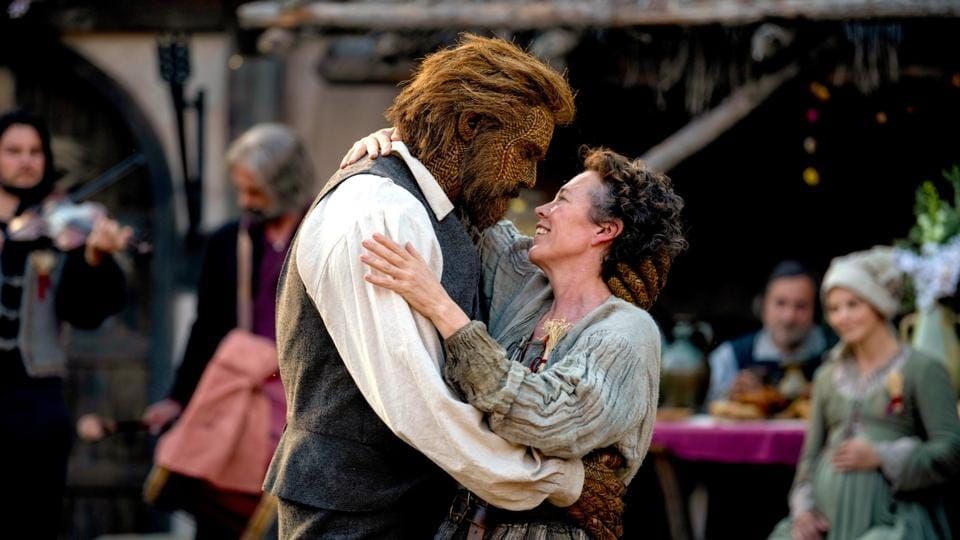
“Wicker” (⭐ ⭐ 1/2) – which I am obliged by Massachusetts state law to pronounce “Wickah” – is a medieval-fantasy-romantic-comedy, and why they didn’t slap a musical on top of the whole thing is a mystery. Written and directed by the husband-wife team of Alex Huston Fischer and Eleanor Wilson from a short story by Ursula Wills, it’s heavy on the whimsy from the get-go, but the whimsy is anchored by A) Olivia Colman, who’ve been following since “Tyrannosaur” in 2012 and will continue to follow until one of us drops dead, B) Alexander Skarsgård, who by now has claimed the title of Thinking Woman’s Sex God from either Viggo Mortensen or [insert your choice here] and who is somehow even more erotically charged when made up to look like a human patio chair, C) Peter Dinklage, who resuscitates his bogus British accent from “Game of Thrones” with a light overlay of queerness as a village craftsman who can do the most amazing things with rattan and D) Elizabeth Debicki, who apparently is too tall to become the kind of A-list star her talent deserves but who layers the movie’s villainess with glimmers of sorrow and rage.
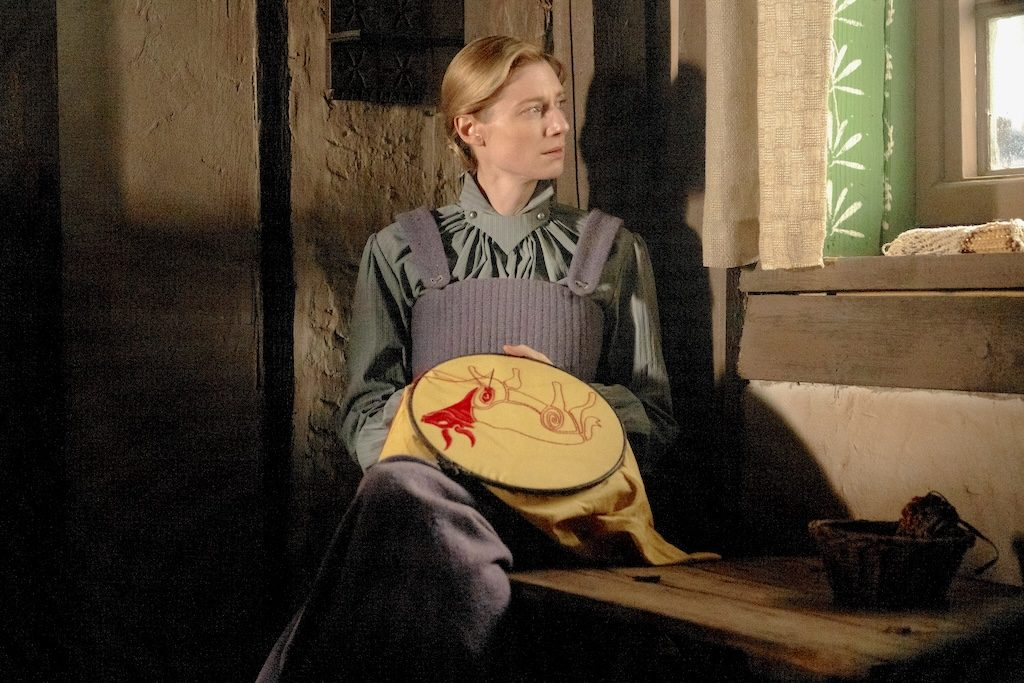
So there’s all that. But you have to roll with this movie early, when a village wedding ceremony in which the bride is fitted with a metal collar serves notice that, yes, we’re one parallel universe over from our own. In this pre-Enlightenment world, everyone is named for what they do, so Colman is the Fisherwoman, a grubby, grotty outcast who sells her daily catch in the town square. Almost on a lark, she commissions the Basket Weaver (Dinklage) to make her a husband, and, lo, Skarsgård appears as the gentlest, most courtly and caring spouse that could be fashioned from reeds. (The outfit is almost completely made from prosthetics created by Weta Studios, with only a bit of digital trickery to let us glimpse through the gaps in the husband’s “skin.”) The Wicker Husband is so loving, in fact, that every woman in the village wants one, which creates the expected mayhem and recriminations, not to mention an uptick in business for the Basket Weaver. “Wicker” manages to keep itself aloft on a welcome randiness and the strength of the performances – Skarsgård is mesmerizing to watch – but after a while you can tell exactly where the movie’s going, and it ain't Home Goods. I quite liked it, a certain subset of moviegoers will love it, and those who prize scrupulous realism will find the whole thing very, very silly. You know which one you are, and if you log on to Etsy immediately after watching “Wicker,” so do I.
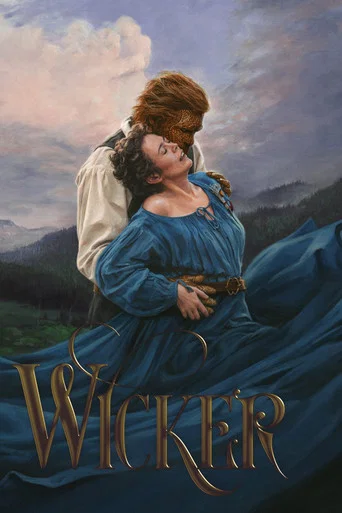
Judging by the poster, by the way, someone in the marketing department knows exactly how to sell this movie to audiences who appreciate irony and audiences who wouldn't know irony if it bit them on the foot:
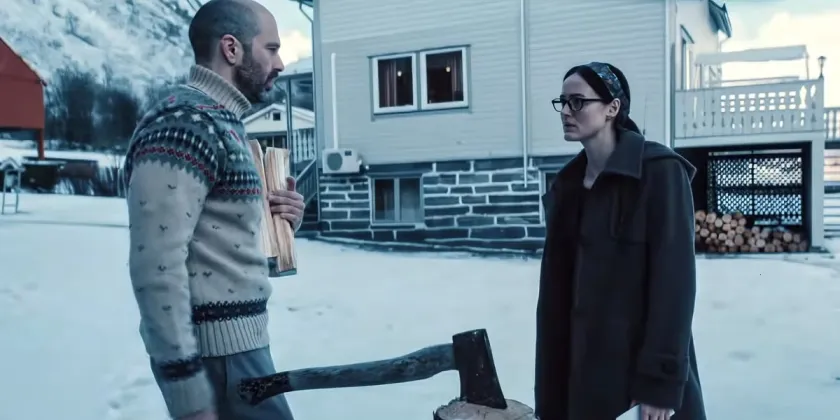
“Fjord” (⭐ ⭐ ⭐ 1/2), the latest provocation from Romania’s Cristian Mungiu, is good for starting conversations if not arguments, but it’s a little tricker than it seems on the surface. Mungiu, of course, made “4 Months, 3 Weeks and 2 Days,” which is legitimately one of the great movies of the new millennium, and his new one won the Palme d’Or at Cannes this past May, so attention must be paid. “Fjord” is about a Christian couple who move from Romania to Norway with their five children; the wife, Lisbet, is played by the Norwegian actress Renate Reinsve and the husband, Mihai, is played by the American actor Sebastian Stan, who (news to me) was born in Romania and spent his early childhood there. Mihai gets a job in IT for the local school system and Lisbet settles back in with her relatives while the two older children, Elia (Vanessa Ceban) and Emmanuel (Jonathan Ciprian Breazu) navigate the sudden freedoms that come with Scandinavian teen culture.
“Fjord” is explicitly about the collision of Europe’s Eastern and Western halves – the former finding value in family and God, the latter in the liberal state. A bruise is spotted on Elia’s back by a gym teacher, and suddenly the parents stand accused of child abuse – well, not accused, mind you, but just in limbo pending a criminal investigation and, oh, yes, we’ll place your children in foster homes for the duration. Including the baby.
The husband acknowledges he has spanked his children occasionally but has never beaten them. The Norwegians see no difference. Mungiu makes sure we register all sides of the escalating battle: The school administration is made up of people who are by turns well-intentioned, ethically correct, biased against religion and absolutely maddening. The principal (Markus Tønseth) is a bureaucrat who hides his moral cowardice under the cover of procedure, while his rebellious daughter (Henrikke Lund-Olsen) finds herself sympathizing with the distraught Elia, and his wife (Lisa Carlehad) becomes an unexpected angel on the family’s side. Mihai, meanwhile, resorts to hotheaded PR tactics that turn the conflict onto an arguably unnecessary and definitely simplistic international culture war. (The director’s screenplay sticks closely to true events in Norway in 2016.)
For all the attempts at balance, though – and Mungiu stuck to this line when I had the pleasure of interviewing him onstage at the Coolidge Corner Theatre earlier this month – it’s clear the director’s sympathies lie with the family, albeit not with some of the husband’s actions. Does this make “Fjord” a conservative tract, as some critics have claimed, or, worse, MAGA propaganda? Of course not. It just points up what the artist wants it to, which is that any society that assumes all its values are shared by all people – and, even more problematically, that enacts those values as bureaucracy – will eventually stop seeing some other people as people. And because Mungiu is Romanian – and therefore a born pessimist who grew up in such a society, just with different values – he sees little chance for change, at least for this generation. Maybe the next. Probably not. Discuss.
Also in theaters is “La Bola Negra,” which won the People’s Choice award in Toronto and the director's prize at Cannes and which is already finding a great deal of love among moviegoers and critics of my acquaintance. I’m not quite sharing that love and I haven’t yet figured out why, so I’m going to see it a second time before I weigh in.
Streaming: “A Talent for Murder” (⭐ ⭐ ⭐ ) –