Stranger Than Non-Fiction: "You Can See Everything"
Is Nathan Fielder's 3-hour documentary about Elizabeth Holmes one of the best movies of the year? It's certainly one of the weirdest.

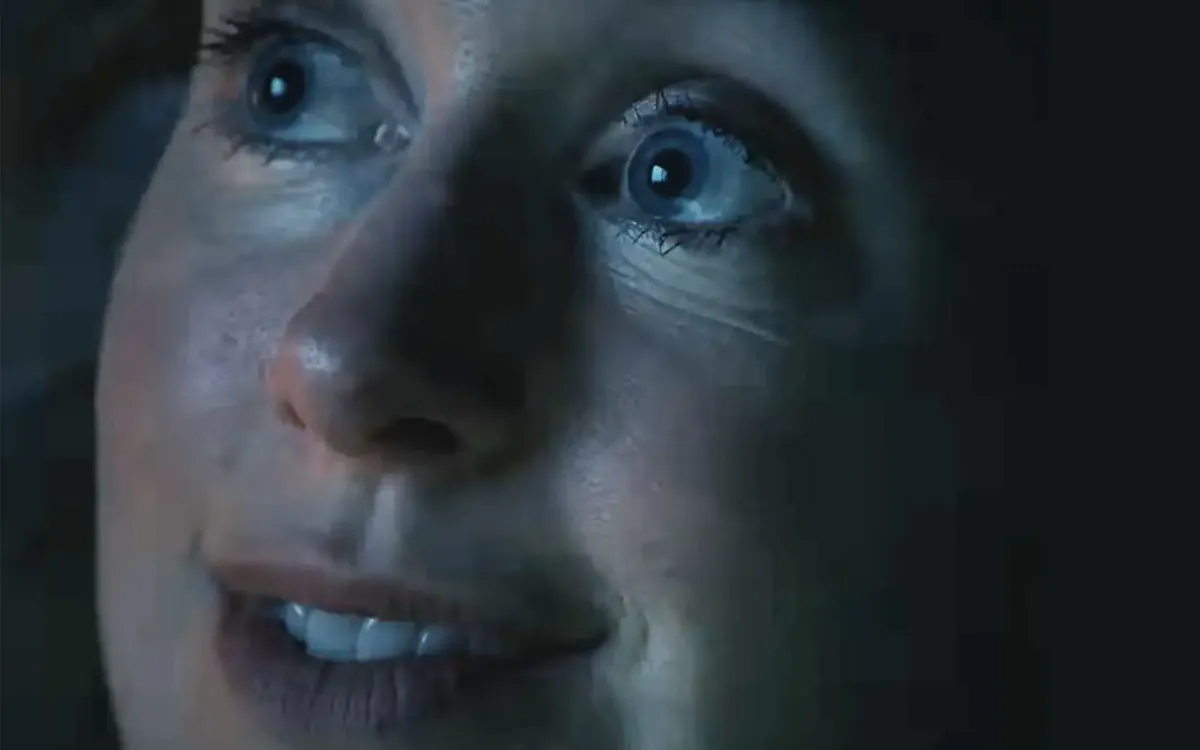
I'm honestly not sure where to start with “You Can See Everything” (⭐ ⭐ ⭐ ⭐, in theaters starting October 16), a documentary that breaks every rule of the form while taking audiences on one of the wildest rollercoaster rides of the year, complete with a mid-movie reveal that rearranged my head in ways I’m still coming to terms with.
The film’s ostensibly a portrait of the disgraced health-tech CEO Elizabeth Holmes, but because the co-director and onscreen interlocutor is Nathan Fielder, a conceptual prankster whose own TV shows are a cross between “Candid Camera” and an ethics seminar thought experiment, any doc traditionalism goes sideways fast. (The film’s other director is Lance Oppenheim, whose non-fiction films play their own games and whose first feature narrative, “Primetime,” is currently bedeviling moviegoers.)
Holmes and her husband, entrepreneur Billy Evans, invited the filmmakers into their home in May 2023 to record their domestic life during the three weeks before Holmes reported to the Bryan Federal Prison Camp in Texas to serve out her 8 ½-year sentence for fraud. The idea, it appears, was to present the couple as jes’ folks and, most crucially, to humanize Holmes into something more three-dimensional than the corporate cartoon villainess she’d become in the public eye. “Radical transparency” says Evans with the swagger of a middling intellect who thinks he’s come up with something great. It sounds like a vanity project from a terminally vain couple, doesn’t it? Well, you’re half right.
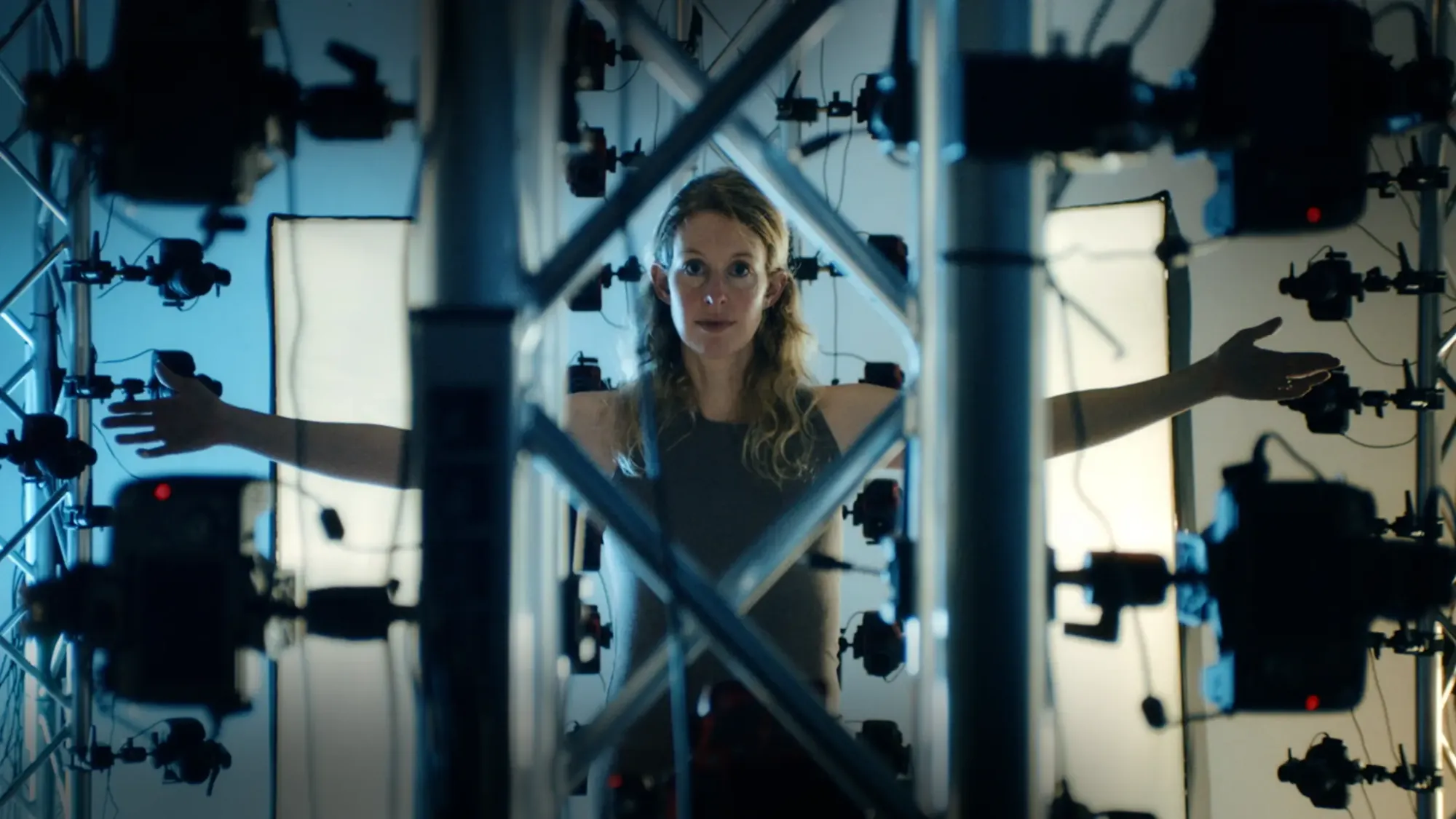
Holmes, it turns out, doesn’t register as a steely MBA dominatrix or a woe-is-me Silicon Valley tech-sis. What she comes off as is … a child. With bleak blue eyes that never, ever blink, she insists to Fielder that the Theranos technology – that little box that could take one drop of blood and spin off thousands of medical tests – did in fact work, that there was no fraud, that she never tried to deceive anyone. “The world believes in a person who’s not me,” Holmes says with an affectlessness that’s the exact opposite of the person the world does believe in: Holmes the conquering technocrat triumphantly holding up a little blood capsule on the cover of Forbes magazine.
The Holmes we see in “You Can See Everything” is frankly a mess. Part of this may be be post-partum exhaustion: She and Evans have a rambunctious toddler and a newborn infant whom Holmes discreetly breastfeeds throughout. Part of it is living with a partner who’s a control freak; when Evans brusquely grabs a bowl of scrambled eggs Holmes is preparing and whisks it himself because “she never stirs it fast enough,” the Narcissist Warning Klaxon should go off in every moviegoer’s head.
And part of it is simply disorientation at seeing one's public self escape containment and take on a life of its own. At one point, Holmes, Evans and Fielder sit on the couple’s bed and watch an episode of “The Dropout,” the 2022 Hulu series in which Amanda Seyfried played Holmes as a rapacious white-collar criminal. Staring into this pop-culture mirror, the real Holmes’ composure slowly cracks and she dissolves in a puddle of tears.
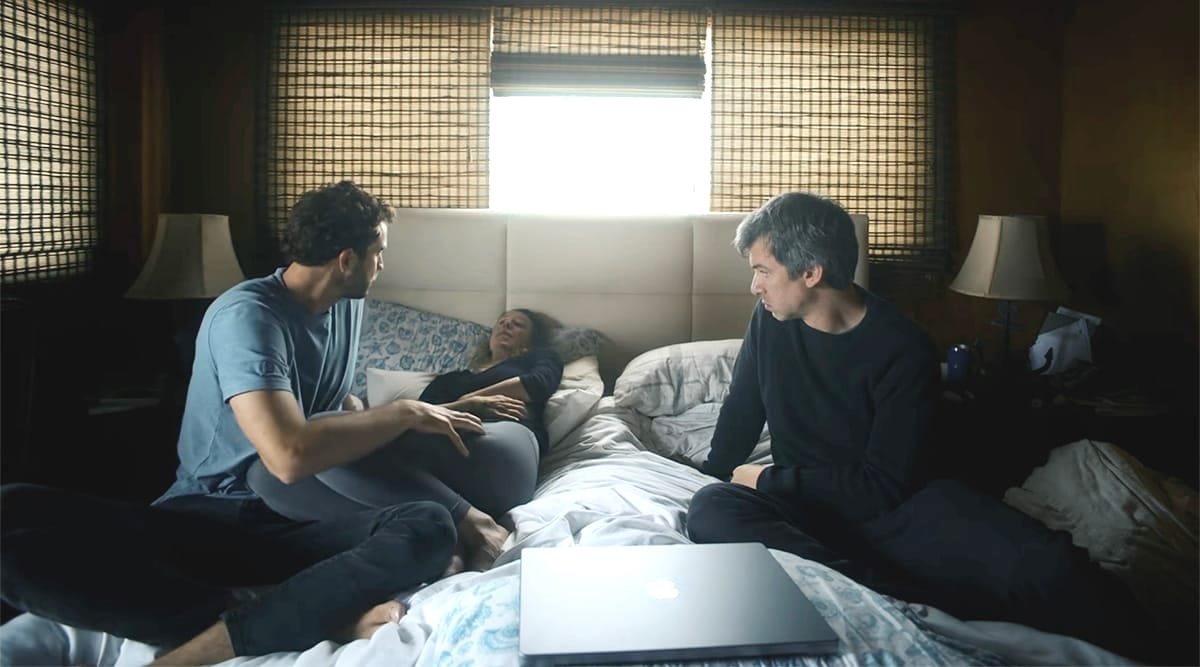
Obvious question: Is all of this an act? Are the filmmakers being played? Are we? This is what Fielder needs to know, and that unsettling doubt – occasionally and understandably turning paranoid – gives the first half of “You Can See Everything” a much-needed ballast. It doesn’t help that the filmmaking initially partitions Holmes, Evans and Fielder into tight close-ups that at first had me wondering whether the director was even in the room with the couple – whether the whole thing was a bit. The score by Ari Balouzian is ominous and melodramatic and very much in the foreground – another sin against documentary “balance.” It takes a while to get into the rhythms and vibe of this movie, and that, I think, is part of the trick. We’re as discombobulated as the filmmakers.
What starts to obsess Fielder is Holmes’ dazed insistence that she has never lied in her life. Is she even capable of lying? Or is she incapable of telling the truth? A possible answer comes when he and we start to understand how far along a spectrum of neurodivergence this woman may in fact be. In a sequence that raises the hair on the back of a viewer's neck, Fielder shows the couple a video one of the more famous 20th century comedy routines and then asks Holmes if she understands what’s funny about it. With the smile of a born people-pleaser, she does her best, but it’s clear that the very concept of humor, founded as it is in irony, is alien to a person who can only process things in the most literal sense possible.
Does “You Can See Everything” want us to feel sorry for Elizabeth Holmes? It seems to, and that’s part of the game as well. Midway through the film, Holmes goes off to prison and Fielder and Oppenheim pick up the story two years later, when Billy Evans has taken over the business of his incarcerated wife’s persona and is aggressively running it into the ground on social media and elsewhere with the conviction of a born egomaniac. The mystery then becomes whether his wife even knows what’s happening outside her cell, and to help figure it out, Fielder springs the film’s most jaw-dropping surprise: A Special Guest Star whose identity I’m not at liberty to reveal but who's in a unique position to weigh in on this psychodrama. The greater surprise is that this person becomes the pillar of objective sanity that Fielder, we and the movie have needed all along.
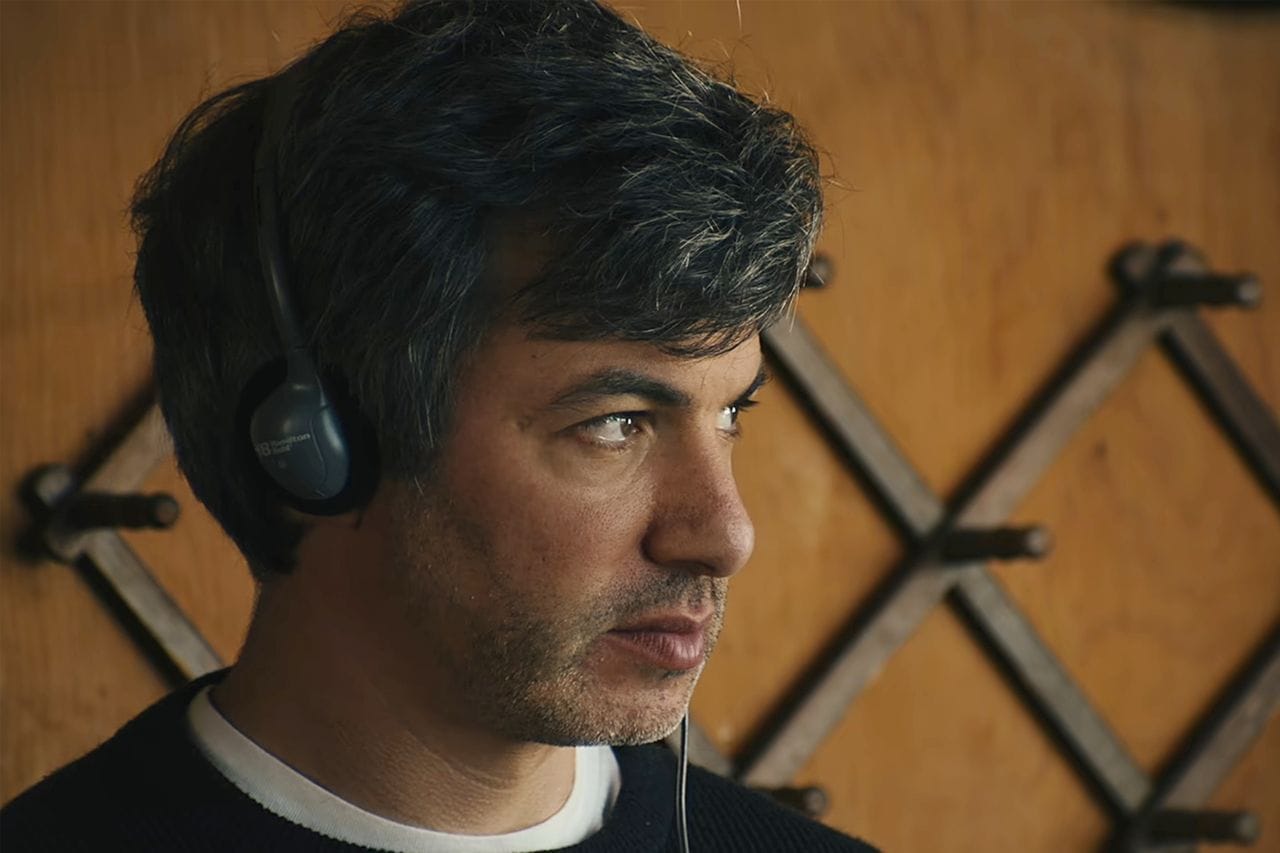
At this point, “Everything You Can See” takes off into areas I don’t think any film, fictional or non-, has ever quite ventured into before. The result is a documentary that interrogates itself – its biases, its methods, whether the truth of any person can be captured by a camera – with concentric layers of meaning that acquire the concatenated complexity of a Borges story.
The scenes in the movie’s back half are unexpectedly delightful – alive with the enthusiasm of two people trying to solve a mystery using the means at their disposal, which include imposture, deception, play-acting and much more. (That viewing of “The Dropout” returns in a way that makes a viewer feel like they’ve gone Galaxy Brain.) Crucially, no one gets off scot-free in the process. Not Fielder, whose own motivations are increasingly compromised by his feelings, and certainly not Special Guest Star, who at one point is confronted with their own complicity in the public stoning of Elizabeth Holmes and who retreats into a defensive posture that fools no one.
It’s worth asking (and maybe you should come back to this after you’ve seen the movie): Is Special Guest Star being themselves or giving a performance as well? (If so, I think they maybe deserve an Oscar.) Is any moment not a performance when a person knows they’re being filmed, and is this person, due to their particular skill set, just better than most at blurring the lines? It’s a question that weighs heavy on the documentary form as a whole, especially as it relates to the non-fiction boom of recent decades, in which the rigorous verite aesthetic of Frederick Wiseman, D.A. Pennebaker, the Maysles and others – itself not without its problems – has been subsumed into the manipulative push-pull of agenda-driven agit-docs, pop-history entertainments and streaming true-crime freak shows.
“You Can See Everything” never solves the mystery of Elizabeth Holmes, although it does leave you feeling she’s a victim of something, whether that’s post-sexual-assault PTSD, media pillorying, a husband who’s a legend in his own mind, exploitative filmmakers or her own cross-firing neurons. When it’s over – did I mention the film’s three hours long? that it holds you steadily in its grip? – you may feel you’ve been watching a Russian nesting doll of Stockholm Syndromes: Holmes for Evans, Fielder for Holmes, Special Guest Star for Fielder, the audience for the movie. The title has by then become a bark of hollow laughter at the very idea of knowability. By the time Fielder and Oppenheim have let us see everything, we understand less than when we started.
Care to comment? Have thoughts about Holmes, Fielder or the rules of documentary moviemaking? Let's hear 'em.
You can read the Watch List for free (much of it), but I don't do it for free. Becoming a paid subscriber helps me keep providing you with good movies to see, cultural commentary, subscriber-only extras and various thoughts to chew on. Plus you can talk back and give me what-for.