
Ramblin' Man: "The Odyssey" reviewed
Christopher Nolan's blockbuster adaptation of the classic tale is an unexpected Homer.

Spoiler alert: He makes it home.
Every cultural era gets the “Odyssey” it needs. Christopher Nolan has given us one we may deserve. That already seems to have set some jaws out of joint.
I confess I am far from being a Nolan fanboy – he’s an exceptionally gifted filmmaker whose straining to create Works of Major Importance can render his movies stiff as a plank – but I went into “The Odyssey” (⭐ ⭐ ⭐ 1/2, in theaters) with an open mind and came out a believer. Yes, it’s long, just shy of three hours, but you’ve binged TV episodes for longer, so don’t give me that. Of course it’s episodic – it’s a narrative that was rooted in a tradition of oral repetition nearly 3,000 years ago before eventually becoming a literary property, and only in the past century has it been delivered to us as an audio-visual epic. (The earliest extant movie version is a 1911 Italian adaptation.) Few screen translations have actually worked; you could argue that the most successful cinematic "Odyssey” is the Coen brothers’ “O Brother, Where Art Thou?”
Well, until now. Nolan’s “The Odyssey” is a rough and rugged thing, lit by guttering flames and streaked with blood both present tense and recalled. The director delivers most of the set-piece sequences we expect – the Cyclops, the Sirens, the Laestrygonians, Circe and Calypso – skips some others (no Phaeacian princess Nausicaä) and staffs his film with well-known performers. Yet it all feels freshly told.
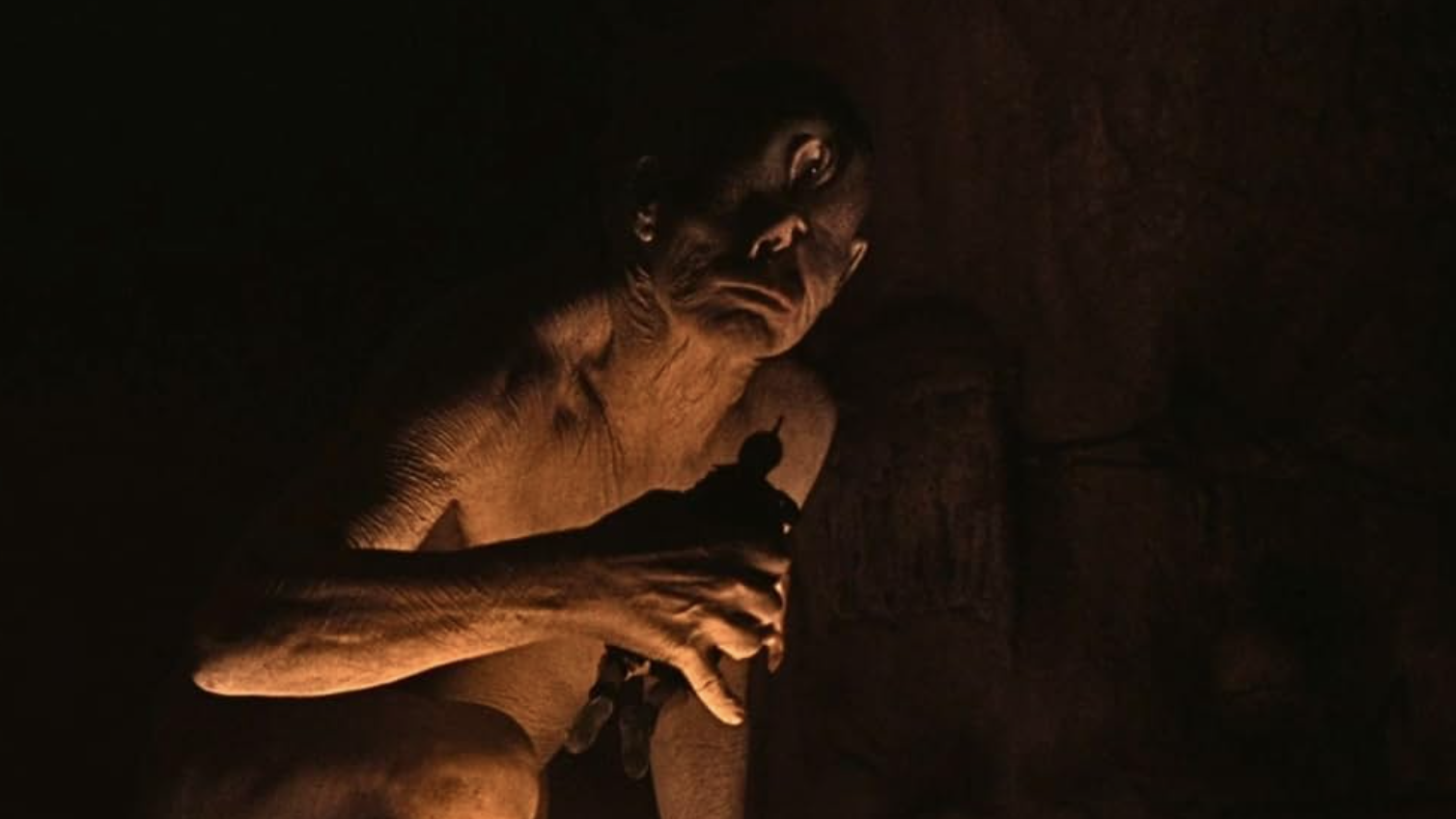
Part of the impact is due to the director’s distaste for digital effects and other pixelated trickery, which pays off in an experience where you almost feel the lash of the waves, the groan of timbers, the salt and exhaustion. The encounter with the Cyclops, immense, lumbering and grotesque, lacks the stutter-stop of an old Ray Harryhausen F/X sequence but also the unreal sheen of modern CGI; it wasn’t until the end credits that I realized it was the great actor-clown Bill Irwin under the make-up and puppetry, rendered nightmarishly huge by old-fashioned movie magic. (To up the horror, Nolan at one point evokes Goya’s painting “Saturn Eating His Son.”) One of the movie’s few concessions to digital jiggery-pokery is when Odysseus and his men sail between the whirlpool Charybdis and the monster Scylla; the former mesmerizingly forceful and the latter something out of a carnivorous Cubist nightmare.
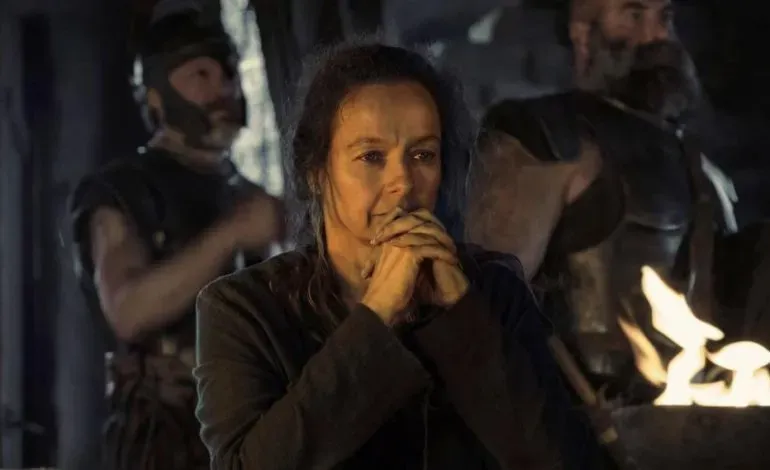
Similarly, Circe is played by the British actress Samantha Morton as a bitter wronged woman, nurturing her grievances by turning Odysseus’ men into the swine she knows they already are; the transformation scene has the tactile dread of flesh refashioned like clay and human gluttony at its most animalistic.
Most important to what Nolan is aiming for is the closeness he brings the movie to the presence of death, meted out more by men than the gods they profess to worship. “The Odyssey” is a story of one man’s hubris condemning him to endless wandering while destroying the men under him, but the director-writer has added an extra burden of psychological complexity to the hero, one that Homer (or all the forgotten bards we collect under that name) had no knowledge of or interest in. At a certain point in the new movie, it becomes apparent that Odysseus may not actually want to go home, because then he’d have to confront his shame over the great trick he played on Troy and the slaughter that followed – a slaughter that he has come to understand was nothing less than genocide.
I don’t use that word lightly, and I imagine Christopher Nolan had it in the back of his mind as well. Not that he's asking for a political reading, but he has given us a conflicted and complicit hero for an era in which it behooves each of us to examine our own complicity, our own looking away, and where that has taken the world in which we live. If that makes for an Odysseus living three millennia before the therapist he probably could have used – well, I already said that we get the “Odyssey” we deserve.
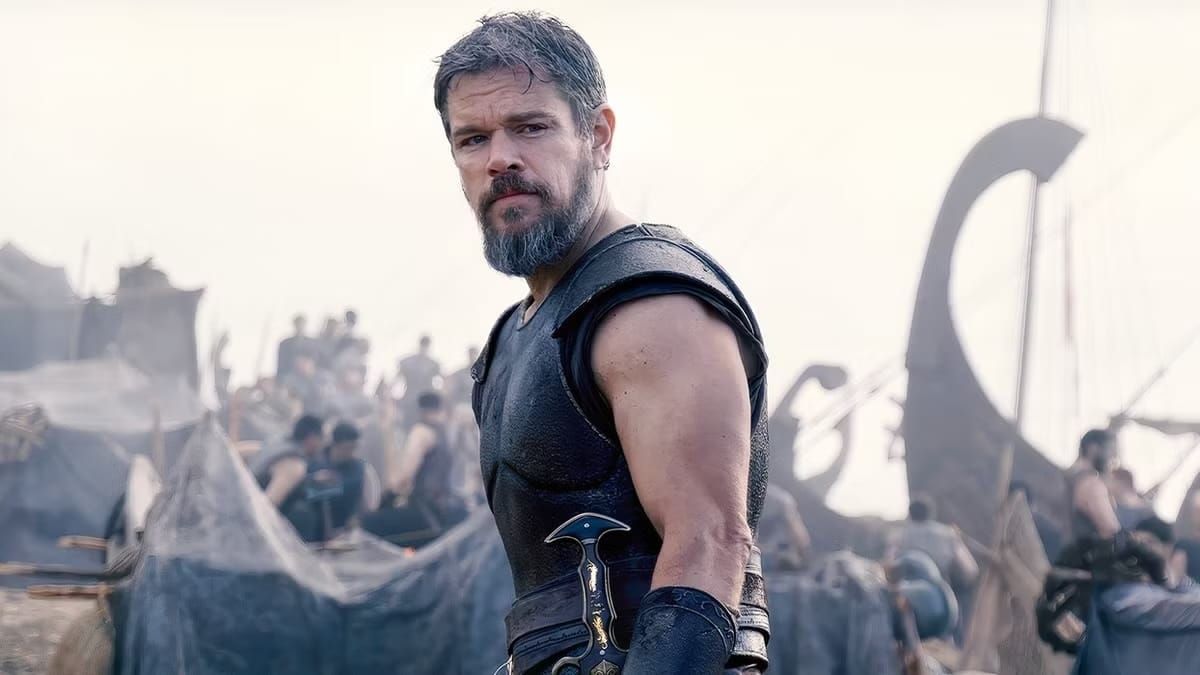
For all that, the movie feels carved out of Bronze Age ore, and I don’t think the combination of mythic adventuring and troubled, fraudulent heroism would have worked with anyone but Matt Damon in the lead. The actor has always been a steady presence onscreen (especially compared to the emotional yo-yo that is his once and eternal screen partner, Ben Affleck), but he can suggest sociopathic undercurrents without breaking a sweat – remember his murderously talented Tom Ripley, or the bland evil of Boston police sergeant Colin Sullivan in “The Departed.” Here Damon’s task is to convince us he’s the legendary king of Ithaca and hero of Troy – a battle-scarred strongman whose soldiers will follow him anywhere – and a guilt-ridden egotist leading those soldiers to their doom. He has to make us believe in a character who’s larger than life even while he’s alive, and then he has to take us through the stages of that man’s moral and existential dismantling until Odysseus is left a white-bearded wraith, his illusions ripped from him as he stumbles home two decades after he left.
Back in Ithaca, of course, things have not gone well in his absence, and here “The Odyssey” dips into melodrama in mostly engrossing, occasionally silly ways. Tom Holland, a gifted young actor who many moviegoers know as the most recent Spider-Man, plays Telemachus, the untested son of Odysseus itching to step into his absent father’s sandals – he's fine when Nolan's script doesn't have him referring to Odysseus as "Dad" – and Anne Hathaway is Penelope, as regal as Nefertiti and besieged by all those young suitors drinking her wine and mucking up the palace. Flashback scenes establish a warm physical and emotional history between the queen and her king; against that genuine intimacy we have Robert Pattinson sneering away as Antinous, the most villainous of the suitors. Pattinson gives an enjoyable performance that’s also pure hambone, never more so than in the climactic donnybrook, as Antinous tries to direct the fight against the returned Odysseus like a ringside coward.

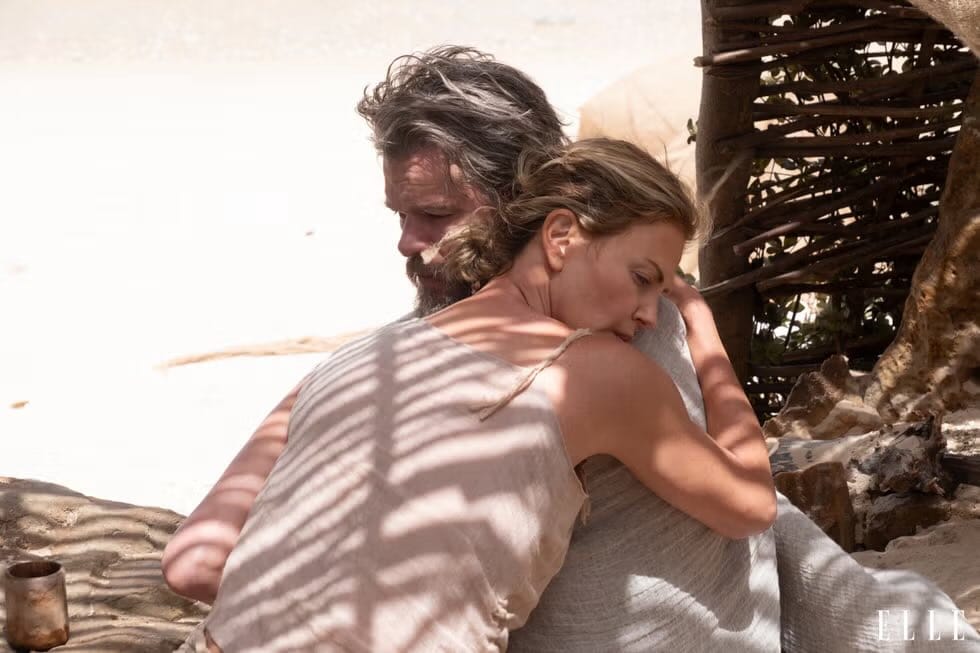
Who else is in this thing? I have to believe Nolan knows we enjoy playing Spot the Star, and he gives us Elliot Page as the young soldier Sinon, sacrificed to set up Troy for the kill and later returning from the dead in a startling scene of recrimination; Charlize Theron as a fusion of Calypso and the Lotus Eaters, mourning the end of her relationship with the amnesiac Odysseus while maintaining a desert island beauty regimen that would be the envy of any Bronze Age influencer; Jon Bernthal as a jovially macho Menelaus, giving the callow Telemachus advice while filling in some necessary backstory; John Leguizamo as the loyal blind shepherd/palace bouncer Eumaeus; Himesh Patel (“Yesterday”) as Eurylochus, Odysseus’ stalwart second-in-command; Mia Goth as a snake of a maidservant; and, quite gloriously but much too briefly, Lupita Nyong’o in a double role as Helen of Troy, brought forcibly home to Sparta and much the worse for wear, and Helen’s twin sister Clytemnestra, whose cup of anger toward her husband, Menelaus’ brother Agamemnon, runneth bloodily over. Apparently, that’s Benny Safdie under Agamemnon’s Darth Vader war helmet, but you could have fooled me.
(Nyong’o’s casting, by the way, has enraged the MAGA minority and various right-wing talking heads, who believe, I guess, that the Face that Launched 1,000 Ships should only be white, notwithstanding that the actress in question actually is the most beautiful woman on the planet.)
Notably missing are any of those meddling Greek deities that caper through the original. In Homer’s “Odyssey,” it’s the gods who humble Odysseus for his pride – they pull the strings, dole out the punishments, pop up under heavy disguise. In Nolan’s “Odyssey,” the gods are mostly offstage, and given that their appearances in earlier movie adaptations have generally invited horselaughs, that’s probably wise. We do hear that Poseidon has been angered by the treatment of his son, Polyphemus, a.k.a. the Cyclops, but his fury only takes the form of a handful of terrifying storms at sea. Hermes is all over the traditional story yet nowhere to be found here, and while Athena turns up occasionally in the person of Zendaya, a sad-eyed angel on the hero’s shoulder, the goddess has a real-world analogue keyed to Odysseus’s guilt. Nor do we see Zeus, but we don’t have to – the breaking of his sacred code of hospitality serves as the movie’s original sin.
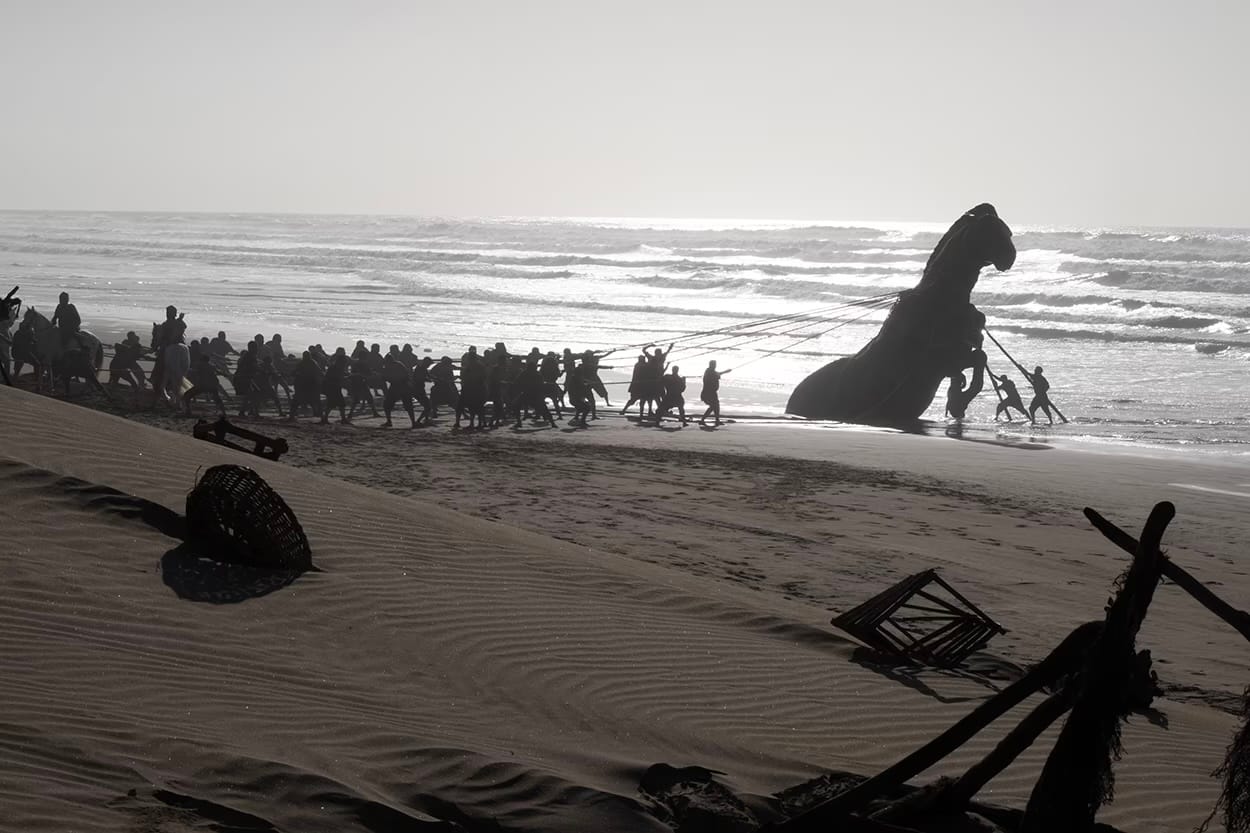
I do have to raise an objection here: Ten years of being forced to sit outside the gates of Troy doesn’t exactly count as hospitality on the hosts' part, and Odysseus can’t really be blamed for coming up with a daring ruse to break the stalemate. The Trojan Horse has been imported from Virgil's "Aeneid" to open the festivities in Nolan’s “Odyssey,” and its arrival in Troy is a marvelous sequence, with hundreds of Trojans hauling the massive metal gift from the beach to the city, the Greek soldiers inside retching and topsy-turvy. The sheer weight of the scene is palpable and so is the crazy nerve of Odysseus’s gambit, and here is where Nolan’s heavy touch finally pays off. The director has found the material to warrant his taste for the legendary, his urge to build something bigger, more meaningful, more profound. In so doing, he rises to the challenge of honoring “The Odyssey” while humanizing it for a 21st century audience. (Will it last? Not as long as Homer, but at least to awards season and probably beyond.)
Nolan's still making a blockbuster summer movie, of course, and movies have a different shape and different rhythms than oral performance. Yet both forms build toward release and closure, the settling of accounts through violence, ironic comeuppance or simple resolution. Nolan’s a ringmaster as well as a tale-spinner, and his “Odyssey” climaxes with two prolonged battle scenes, the first flashing back to the carnage in Troy as men, women and children are put without mercy to the sword, and the second the return to Ithaca, with Odysseus throwing off his beggar's cloak and standing revealed while he and Telemachus dispatch an army of suitors who aren’t about to leave quietly. The audience at the screening I was at cheered the latter as if they were at an old blood-and-thunder stage performance, and I imagine Homer’s audience might have reacted much the same. Nothing ends an epic like retribution, divine or man-made, and while Damon’s Odysseus feels just terrible about what happened in Troy, back at the home office, not so much.
I should point out that Hoyte van Hoytema’s cinematography is majestic in both firelight and sun, that Ludwig Göransson’s score sounds roughly sourced from available 8th Century B.C. instrumentation and that, as a whole, the movie’s illusion of whisking us 3,000 years back in time is almost unnervingly convincing. The film was shot in IMAX, and on the big screen, in the dark, with your phone silenced is really the only way to see “The Odyssey.” (Even with some focus issues at my screening, I was transported and held for the full 172 minutes.)
If you follow Homeric translation gossip, you probably know that Dr. Emily Wilson’s 2017 “Odyssey” courted some controversy – misguided as far as I’m concerned – about fidelity to the source. Translations of the opening lines in particular – ἄνδρα μοι ἔννεπε, μοῦσα, πολύτροπον, ὃς μάλα πολλὰ πλάγχθη, ἐπεὶ Τροίης ἱερὸν πτολίεθρον ἔπερσεν – have over the centuries Anglicized the description of Odysseus as “πολύτροπον” into “resourceful,” “deep,” “many-sided,” “clever,” “cunning,” “versatile,” “the man of twists and turns.” Wilson chooses the simple but resonant “complicated,” which is both faithful to the original while shadowing the word with its modern association, “problematic.” She, too, has made an Odysseus and and an "Odyssey" for our time, as of course she must, as Christopher Nolan would be foolish not to and which to his credit he has. Our task is only what it has always been: to pull closer to the fire and listen.
Feel free to leave a comment or add to someone else's.
You can read the Watch List for free (much of it), but I don't do it for free. Becoming a paid subscriber helps me keep providing you with good movies to see, cultural commentary, subscriber-only extras and various thoughts to chew on. Plus you can talk back and give me what-for.


.jpg)