Richard Lloyd 1951-2026
Remembering the other great guitarist in a legendary two-guitar band.


[Note to subscribers who are here for the movies: I write about music occasionally and even more occasionally about one of my favorite bands, but Television has unfortunately been in the news a lot lately because the members keep dying: leader Tom Verlaine in 2023, bassist Fred Smith earlier this year and now co-lead guitarist Richard Lloyd. Billy Ficca, I hope you're taking your meds wherever you are. Follow the first two links above if you have no idea who I'm talking about and follow me way down the rabbit hole of Verlaine's guitar-work if you're truly interested. It's good that Lloyd is getting the ink he deserves, given how long a shadow his bandmate cast; I'm just sad he had to die for it to happen. Anyway, here's my two cents, with a longish post I put up on Facebook last night reposted at the very end.]
I read somewhere once that George Harrison had the fortune and misfortune of being a good songwriter in a band with two great ones, and that's a little bit how I feel about Richard Lloyd, a world-class rock 'n' roll guitarist in a band with a guitarist who was out of this world. Lloyd's gifts weren't wasted on anyone who really paid attention to Television on record, to his sideman work with Matthew Sweet and others, and certainly not in concert, where the group's twin-fretboard assault was more clearly and cleanly obvious, with Richard's liquid runs anchoring Tom Verlaine's angular ascensions to the heavens. "This is not earth music," Atlantic Records head honcho Ahmet Ertegun famously said about Television in his decision not to sign the group in 1976, but Lloyd was, in fact, the grounding principle to his partner's sky. He worked within a traditional rock-guitar framework, which sounds like a put-down until you actually hear the amazing things he did withn that framework. Since his death was announced Saturday, I've been triangulating between Richard's solo albums, Television's three studio releases and the mountain of bootleg recordings I've acquired over the decades – yeah, I'm that guy – and I keep coming back to "Real Time," the 1987 live album that was out of print for years until it recently popped back up on streaming services like Spotify and Tidal. The record's a reminder of how strong a singing voice Lloyd had (compared to Verlaine's enlightened squawk, at least) and how confident was his playing. Newcomers are directed to these two tracks, one ballad and one ball buster:
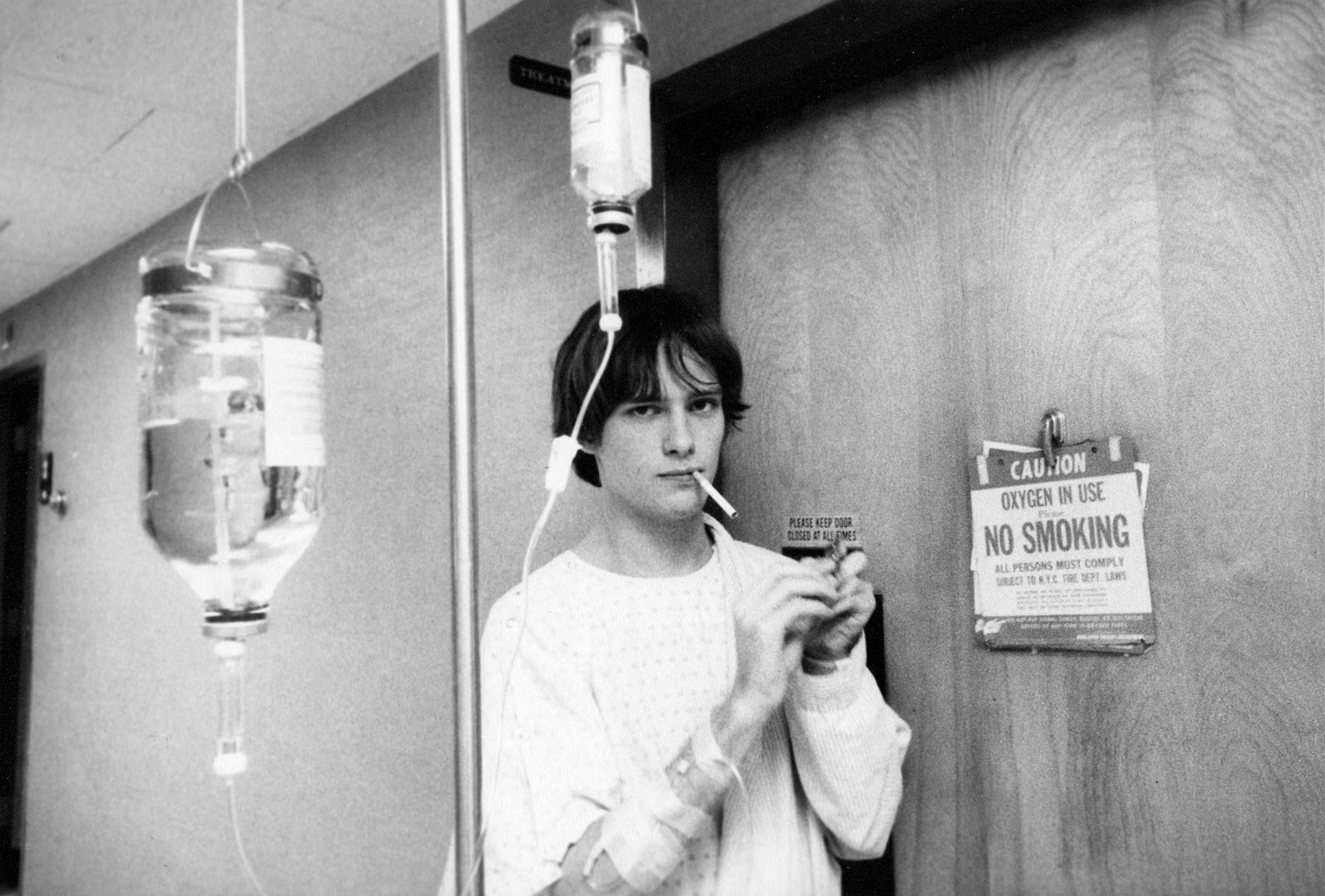
In the early days of Television, when the band was ripping up CBGB on a nightly basis, Richard was the cutie-pie of the group – I guess you'd call him the Paul, if Paul had sold weed from his hospital bed while trying to clean the heroin out of his system. Verlaine was too ethereal and insular to be anybody's Tiger Beat cover, but Lloyd, as with his guitar playing, seemed a more conventional rock 'n' roll bad boy. (Again, this is not a dis.) On one of my bootlegs, at the end of a performance of "Marquee Moon" at Max's Kansas City on October 27, 1975, you can hear a female fan call out "RICHARD!!!" and then a woman sitting closer to the microphone comment "Somebody likes my Richard a lot" with an amused keep-your-hands-off sense of ownership.
In person, Lloyd was intense, often congenial, secretly spiritual, sometimes weird. Read his 2018 autobiography "Everything Is Combustible" if you want to sample all four, or watch this undated, uncredited interview if you want to spend a pleasant hour with the man. He had eyes that never seemed to blink and an itchy edge to him – Michael Shannon would definitely play him in the movie. I saw the man live a handful of times, two or three with Television after it had recombined in the 1990s and twice on his own. The first time, at Boston's Paradise in 2009, Lloyd had a temper tantrum when people at the bar wouldn't stop talking during his set, cursed out the audience, and walked off stage. He had a point, but it was a bit Travis Bickle-y. After a half hour had passed, he came back onstage and proceeded to blow the windows out and roof off via guitar. Mission accomplished.
The second time was in 2019 at ONCE in Somerville (thanks to Phil Obbard and the newly reconstituted, stunningly thorough Television fan-site The Wonder for confirmation of date and place) and I got to talk with him between sets. It was nice, but I could tell I was another gray-haired fan and he seemed more interested in chatting up my daughter. (She was in her mid-20s and took it in stride.) He did a couple of Television songs, "See No Evil" and "Marquee Moon," but mostly because he figured he had to and maybe because he wanted to remind us of the stamp he put on both: That solo on "See No Evil" remains one of the great moments of 1970s underground rock:
Look, it's hard being the second-best-known member of a historic cult band. Maybe the only way to deal with that to is play like you're second-best to nobody. That's what Richard Lloyd did with his guitar. That's what he seems to have done with his life. You can ask no more than that.
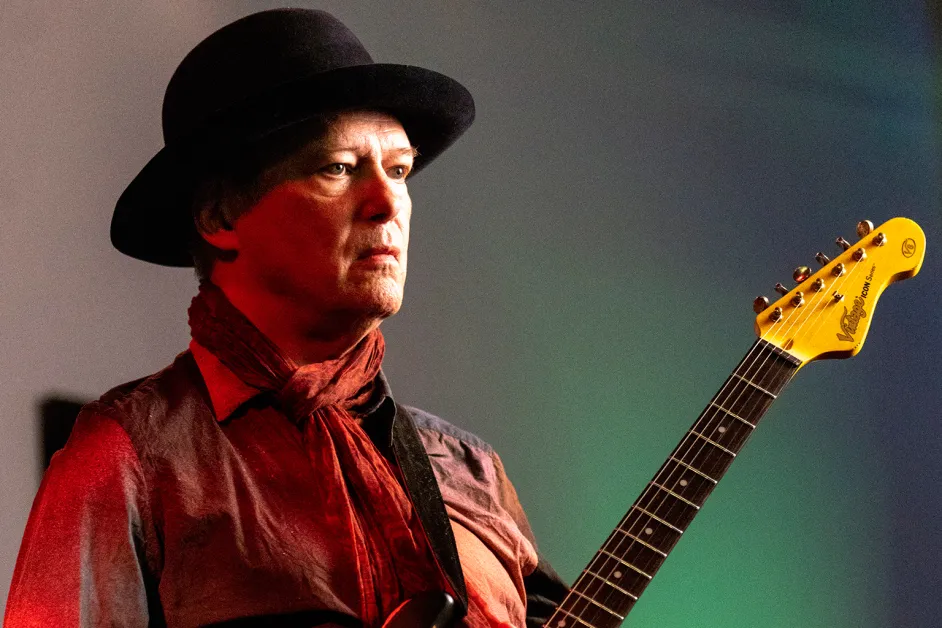
Here's what I posted on Facebook last night – handy for those who can't tell Richard's guitar sound from Tom's.
(Please put your headphones on.)
I've been listening to Richard most of the weekend, by which I mean his solo albums but also his solos, period, with Television, on the studio releases and the bootlegs. And for those who never heard or understood how he and Tom Verlaine balanced each other in one of the great twin-guitar groups in rock history, I offer these slices of "1880 Or So," performed live at The Academy in New York on December 4, 1992.The entire song is here:
Richard solos first, as he often did, and you can hear it here:
It's a fleet and exceptionally fiery series of runs and a hair-raising example of what Richard Lloyd brought to the party: A mastery of the vocabulary of his instrument, wielded with purpose, intelligence, guts and instinctive melodic invention. That's what made him a valued sideman for Matthew Sweet and other musicians – the sense that Richard knew everything you could do with a guitar within the established parameters of rock and roll.
Outside the parameters of rock and roll – that was for Verlaine. Here's his solo from later in the same song:
Hear that? It's a completely different lexicon – not rock, not jazz, just ... Tom. Idiosyncratic to the max and therefore inimitable. Richard could teach what he played, and he did, becoming a mentor to dozens of students over the years. There is no school of Verlaine.
Television needed both, of course; rock and roll needed both. I needed both. Without Richard holding down the center, Tom disappears into the ether; without Verlaine exploring the outer rim, Lloyd's traditionalism is never pushed to its limits. Both men's solo albums are eminently worthy while heading in opposite directions – but together they made a sound that roared in tandem and perfect tension. R.I.P. to a man, a band and an era.
(You may now remove your headphones.)
Thoughts? Let's hear 'em.
You can read the Watch List for free (much of it), but I don't do it for free. Becoming a paid subscriber helps me keep providing you with good movies to see, cultural commentary, subscriber-only extras and various thoughts to chew on. Plus you can talk back and give me the business.