Book Review: "How to Prepare for the Past"
A phantasmagoric rock memoir from a man who apparently was everywhere. Plus: Billy Collins parodies Mary Oliver (or does he?) and some Criterion Channel picks.

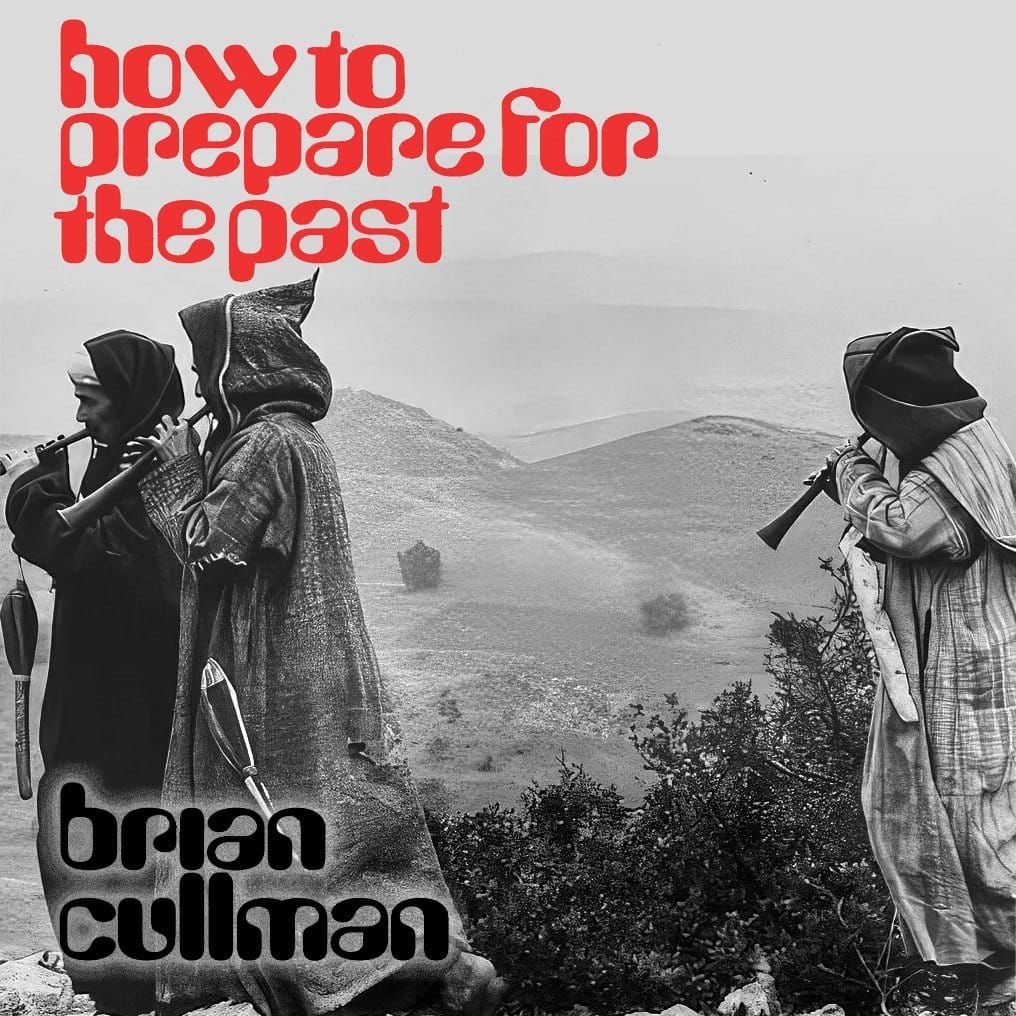
Back in the mid-1980s, when I was a post-college zygote living in New York City and just starting to get stuff published in magazines, I met a man named Brian Cullman, who was a musician and a music journalist but mostly a guy who knew people and whose taste was ahead of the curve. When, in the wake of Paul Simon’s “Graceland” and the “Indestructible Beat of Soweto” anthology, I and a lot of folks got into Afro-pop and other styles of what was then called “world music” (the assumption being that America was somehow not the world), Brian had long since set up camp there and was scouting further out: It was he who introduced me to the Algerian rai superstar Cheb Chaled, the Pakistani qawwali master Nusrat Fateh Ali Khan, the clustered alien harmonies of “Le Mystère des Voix Bulgares.” Closer to home, it was Brian who in 1987 pressed into my hands an album by a Seattle rock group called Mother Love Bone, whose gnarly rock sound he said was the coming thing. It didn’t do much for me, but that wasn’t Brian’s fault, because neither did the band that two of the group’s members formed next, Pearl Jam, or Nirvana or any of the other flannelled heroes of the Pacific Northwest grunge scene. (I’m okay with being a cultural outlier here.)
I can’t remember how I met Brian – maybe at a concert or a club, maybe via friends, maybe through the legendary songwriter Doc Pomus (“Lonely Avenue,” “This Magic Moment,” “Save the Last Dance for Me”), who I was hanging around with while Doc collaborated with Willy Deville, who I was profiling in an article for Spin. Brian was one of those mysteriously connected New York scenesters who knew everybody – I mean, everybody – yet what was great about him was his open-faced enthusiasm about music and the infinite diversity of the people who made it, as though he’d just got off the bus from Dubuque but forgot to pack his doubt. Brian had a near-total lack of interest in projecting cool (which of course made him cool); that, along with the Persian pointy shoes he favored, as though a magic carpet had recently deposited him on the Lower East Side, marked him as a true original among the strivers and pretenders and cokeheads and cynics of 1980s Manhattan. And while we got to be very friendly over the next decade before I relocated back to Boston, I sensed I was only getting the tippy-top top of what Brian heard, who he knew and where he’d been.
But now he’s written a memoir. And, man, I had no idea.
Actually, “How to Prepare for the Past: Travels in Music and Time” (Ze Books; you can buy it at Bookshop.org) is part memoir and mostly fever dream, reverie, conjure. It begins with Ed Sullivan vowing he’ll never have the Beatles on his show again while talking to Brian’s dad at a shoeshine stand on the Upper East Side in 1963 and ends many years later in the midnight deserts of Morocco with the Master Musicians of Jajouka playing until dawn. You never know who’s going to show up in the middle. Sandy Denny, drunk and insecure. Jazz giant Gary Peacock just another bassist for hire when a member of Cullman’s band can’t make the gig. An aging Big Joe Turner, king of the R&B shouters, living in Brian’s Chelsea apartment building with his wife Pat. (Other neighbors included “cabaret singer Baby Jane Dexter, a South African pornographer, the bass player from Blondie, an Austrian hand model and an Italian journalist who liked to have sex with his door open.” God, I miss New York.)
Miles Davis appears like a revenant in the VIP balcony at the Ritz nightclub. “He looked intimidating but also intimidated, like he was holding himself for ransom.” A lump on a sofa in a London apartment moves, rises and turns out to be the lost folkie godhead Nick Drake. (Brian! You never told me you knew Nick Drake!) There's Lester Bangs (dead), Thelonius Monk (dead), Paul Bowles (alive), Jean Rhys (somewhere in between, pickled in gin at the Portobello Hotel). Singer-songwriter Tim Hardin, whose songs (”If I were a Carpenter,” “Reason to Believe”) are as tender on a turntable as he was “a beautiful thug” in person. Dr. John playing rambunctious New Orleans piano while “his eyes had that deep and faraway glaze you see in the eyes of dogs tied outside convenience stores, waiting, not sure their master will ever return.” Many, many, many hustlers and abusive producers and junkie guitarists and simon-pure New York characters whose names you don’t know and don’t need to because most of the are dead now anyway but “How to Prepare for the Past” brings them sadly and crazily back to life. A bad-news ballerina on Quaaludes repeatedly appears in short installments, the kind of girlfriend your mother warned you about.
Brian writes like he’s been carrying this book in his blood since before I knew him; his prose is often beautiful, sometimes too much so, the paragraphs and detours piling up like taxis on Third Avenue when the clubs get out, piling up like I’m writing now because I finished reading it last night and am still under its spell and also glad to have my friend back. He could have used an editor (says the editor who lives inside me) and an occasional depurple-izer, but then we might not have gotten the long penultimate chapter in the desert which burrows into a music much, much older than the earth:
“The musicians gathered, and as the flames rose in the cool night air, the music grew stranger and wilder then when the tapes were rolling, and it felt like the pounding of the drums and the shrieks of horns were feeding the fire, burning a hole in the night. There was a change in the light; rather, a change in the quality of the darkness, and people, trees, stones, even shadows all looked like they were lit from within, glowing. At that moment, you could tell that the musicians were no longer playing the music, it was playing them, raging through them like a fever, and in the violence of the sound, you could hear the very beginnings of music, beyond reason, beyond language, the howl and a prayer of pure passion and terror, the yarrgh at the back of every life.
That sound, that wail, obliterates logic and connects to something older than thought and deeper than language. Even though words can express complex ideas, language almost always doubles back on itself, and the words themselves become about language. Be careful when you’re given a watch; you’re actually being strapped onto time’s wrist, and you yourself are the watch’s birthday present. So it is with words.”
On the book’s back flap is a picture of Brian, white-maned now, with a black dog of some indeterminate pug breed on a table in front of him. He still has the shy smile and wide eyes of a kid who just got off the bus. That takes work. That takes grace. Good to see you again, old friend.
(Brian was just interviewed on the Rock's Back Pages podcast; you can listen to it here.)

An addendum to my recent review of the Mary Oliver documentary: