What to Watch: "Blue Heron," "The AI Doc: Or How I Became an Apocaloptimist"
Sophy Romvari's heartbreaking memory play comes to theaters while Daniel Roher's AI both-sidesism hits VOD.

Quote of the week:
Me to my Zen teacher after reading a really annoying article by an American Buddhist about how all other American Buddhists are "doing it wrong": "Is there a word for someone who claims to know how everyone else is supposed to practice?"
My Zen teacher: "Oh, yes. We call those people assholes."
An announcement regarding Ty Burr’s Movie Club at the West Newton Cinema: We’re continuing with our monthly screenings and discussions, held every second Thursday of the month at 6:30 PM, but we’re doing a change-up in how we’re approaching the programming. As of this Thursday, May 14, we’re inaugurating a program we’re calling “Cinema 101,” where we’re going to be screening the great must-sees of film history. The war horses. The towering classics. The ones you’ve may have seen once or twice or 10 times before, but maybe you haven’t ever, and maybe your kids haven’t ever, either. Think of it as our version of “100 Movies To See Before You Die.” And what better movie to start off with than Alfred Hitchcock “Vertigo,” a film that has sat atop lists of the greatest movies ever made, and that 68 years after it was released is even more divisive than ever – and yet is somehow more relevant than ever in terms of the gender discourse. (Here’s my take from the Washington Post from back in 2023.) Come see Jimmy Stewart go over to the dark side and Kim Novak give a dual performance for the ages. (And Midge. Poor Midge.) The movie starts at 6:30 Thursday May 14th, the arguing immediately thereafter. Hope to see you there.
New in Theaters:
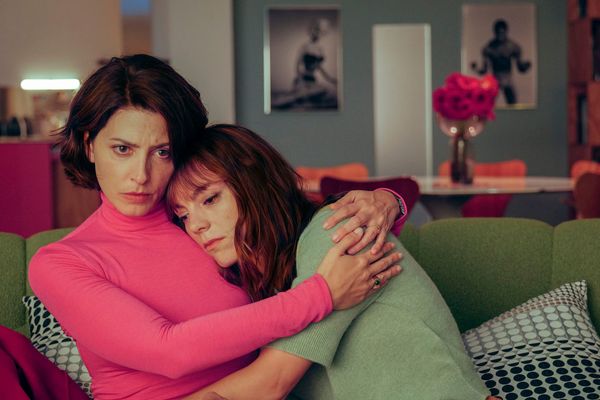
“Blue Heron” (⭐ ⭐ ⭐ ⭐) – How exhilarating it is to come across a filmmaker whose eye is fresh, who views the familiar things of the world with a clarity and from angles that make them feel seen as if for the first time. Sophy Romvari’s haunting, semi-autobiographical tale of growing up in a family upended by an older brother’s mental illness – the writer-director’s debut feature after an acclaimed, award-winning series of short films – is widening its release following a successful festival run and last week’s NY/LA theatrical opening, and I’d urge you to take it in on the big screen if possible. The vast Vancouver Island settings help, as does Maya Bankovic’s pellucid cinematography, but the movie’s retina, for lack of a better word – its psychological screen, the directions the camera-eye chooses to look, the incidental details it picks up and the larger picture that remains just out of the central character’s/filmmaker’s grasp no matter how much she widens the frame – all these stem from Romvari’s sensibility, which functions as a kind of emotional Geiger counter searching a family landscape for gamma rays of meaning.
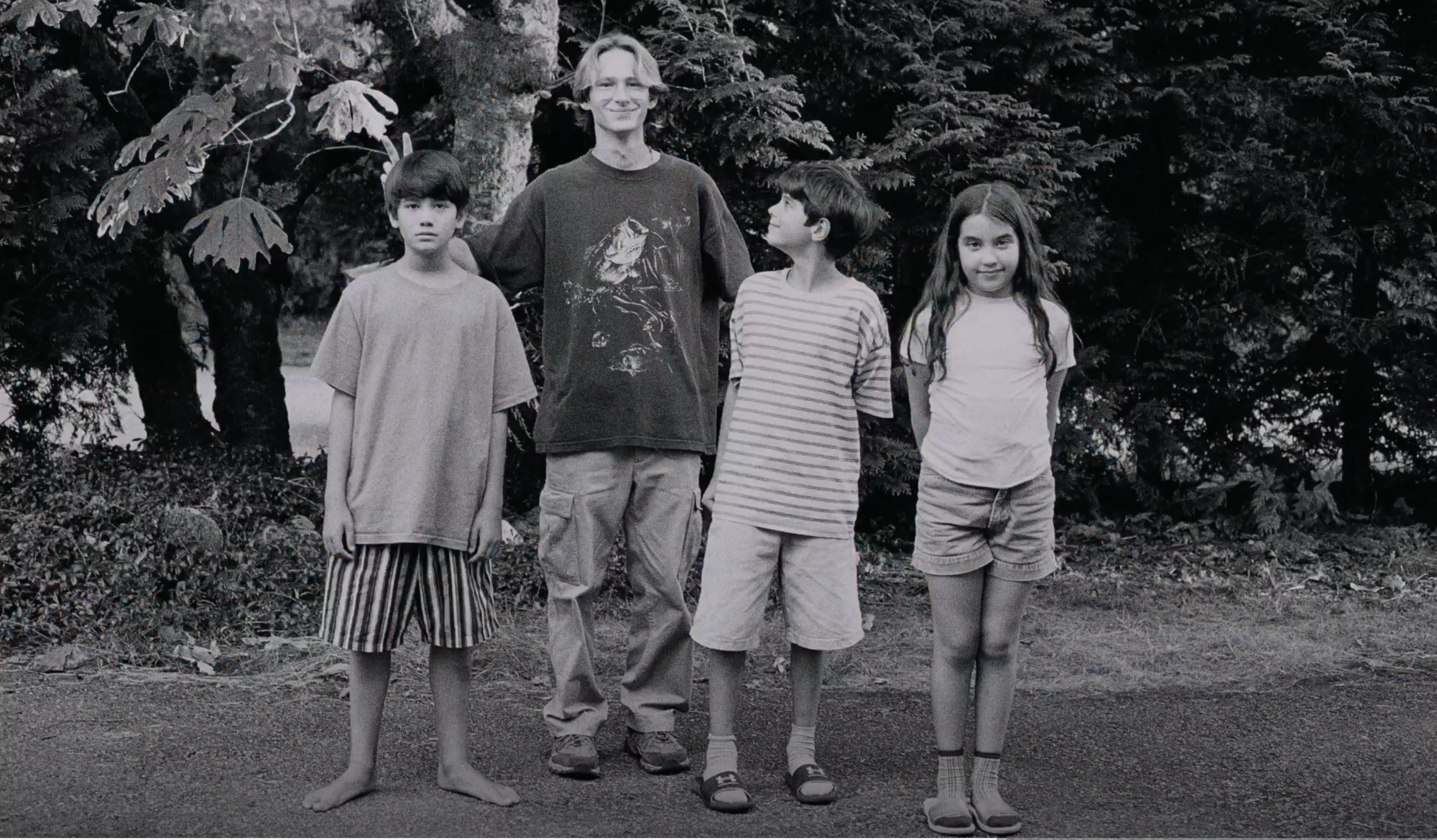
It’s a structurally challenging movie that initially seems part of a familiar genre: A coming-of-age story about a family’s coming apart as seen by its youngest child, eight-year-old Sasha (Eylul Guven). The time is the mid-to-late 1990s; the family has just relocated from Hungary to the west coast of Canada. They move in during the summer, before school has started, and the first half of “Blue Heron” moves to a lazy, unstructured rhythm that gathers ominous overtones. Father (Ádám Tompa) is some kind of photographer/videographer who spends too much time working at his computer – a boxy, pre-iMac Apple – while mother (Iringó Réti) tries to keep their four kids busy with a mixture of exploration and resentment. They are Sasha, her slightly older twin brothers (Liam Serg and Preston Drabble) – and Jeremy (Edik Beddoes), the mother’s 14-year-old son from a previous relationship, who’s silent in a dreamy way that quickly acquires aspects of parental nightmare.
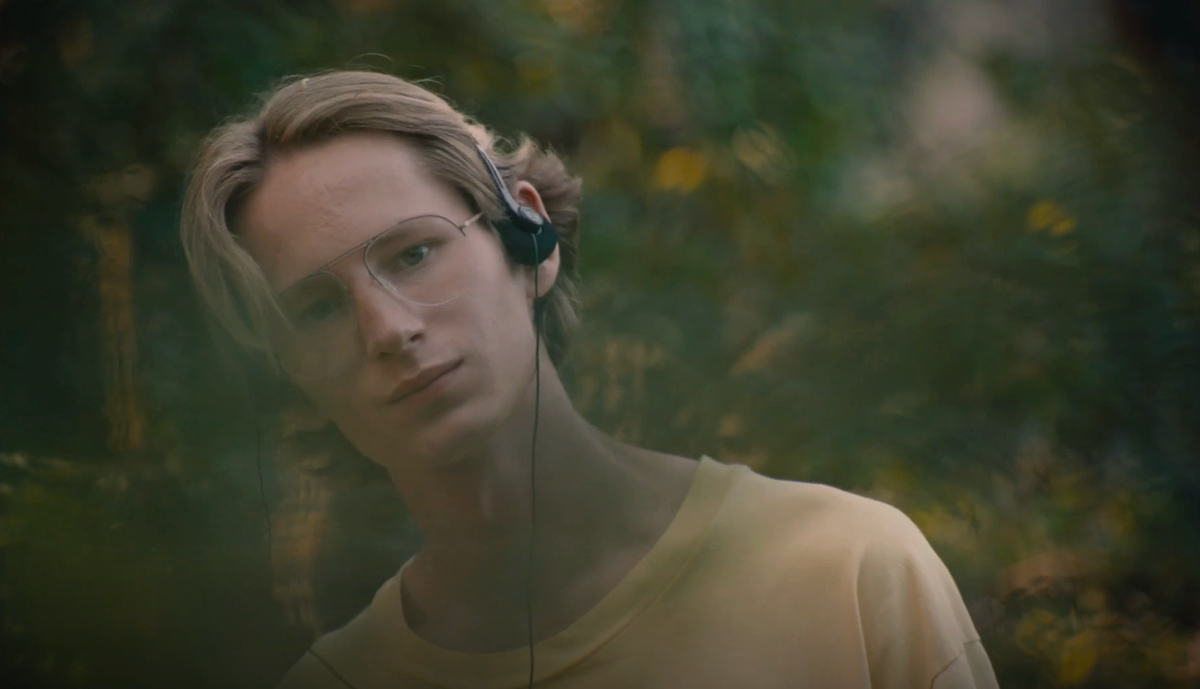
These scenes are told scrupulously from a little girl’s point of view as she eavesdrops on an adult world and tries to fathom its mysteries. To her (and so to us), Jeremy is a visiting extraterrestrial behind his oversized aviator glasses. He hardly ever speaks, covers his bedroom walls with fanatically detailed hand-drawn maps of imaginary cities, and acts out in ways that are more strange than rebellious. There are arrests for shoplifting, a dance along the edge of a roof, a fist through a window. The parents, urban sophisticates in their native country but floundering here, consult the professionals of a hapless mid-1990s Canadian social-support system, but no one seems to have a diagnosis, let alone a plan. The mother is certain she’s somehow to blame, and Réti lets us see the anxiety that's slowly hollowing a smart, feeling woman out.
Then “Blue Heron” does something curious, and if you like solving cinematic puzzles, I’ll leave the surprises for you to discover on your own. (You can always come back here later if you’re of a mind to ponder or to argue.) Romvari, it turns out, isn’t interested in investigating the enigma of Jeremy so much as the mystery of memory itself – of how a child’s impressions of events, the gleanings and guesses, get cobbled into an adult narrative that may or may not reflect what actually happened. Does that adult then have a responsibility to fill in the gaps? Sasha’s curiosity about her half-brother – the wound he left in her family, her unsolved love for him – becomes the thing Romvari and the rest of “Blue Heron” explores.
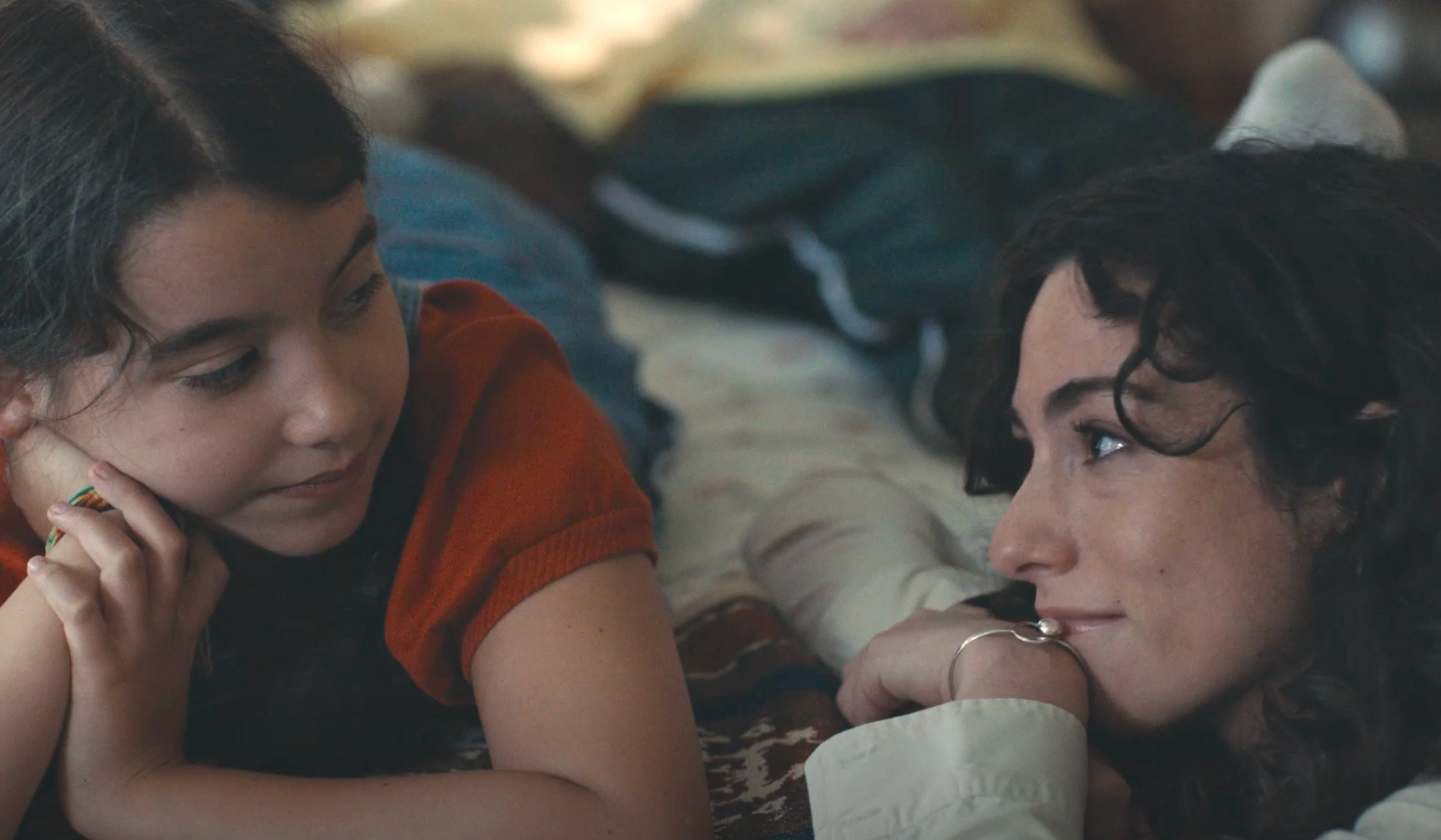
Without warning, we’re in the modern day, and an older Sasha (Amy Zimmer) – a physical and thematic stand-in for the director – is a filmmaker working on a deceptive project where she invites a room full of child psychologists and social workers (all playing themselves, apparently) and presents them with a case from 20 years earlier, of a family with a troubled, possibly mentally ill son. She doesn’t tell them of her personal relationship to the story but simply films the "experts" as they discuss what might have been done better or how this anonymous boy’s case might be handled differently today. Is Sasha actually making a movie, or is she just trying to get to the bottom of something? It’s immaterial. The answers she wants aren’t there.
Then Romvari takes an even more disorienting metafictional leap, as the adult Sasha drives out to Vancouver Island to visit her family exactly as they were in the 1990s, posing as the social worker she remembers her eight-year-old self secretly listening to her parents consult with. Is this the dream we all carry with us? To return to the scenes of our childhood with an adult’s perspective? (It’s certainly the purpose of most cognitive behavioral therapy, and you can certainly argue that film in general and this film in particular serve as forms of therapy.) These scenes in “Blue Heron” are heavy with emotion – Zimmer’s adult Sasha is often in tears, and you may be, too – and they work toward a resolution that’s still not quite coming, not the way Sasha would like, even if there’s the lovely image of a grown woman watching a kiddie show on TV alongside her remembered childhood self and her brothers. Jeremy’s there in the background of that memory, too. Until he’s not.
Beddoes’ performance is spooky and deeply sad. Wherever this boy is, he's far, far away, in some place family and memory can’t reach him. And yet the title of “Blue Heron" comes from one of the few points of emotional contact between Jeremy and his sister: A plastic keychain he swipes from a local nature center that the family visits in an early scene – little Sasha is the only one to notice the theft – and that he gives to her during a day at the beach a few days later. We briefly glimpse that keychain in the possession of the adult Sasha, too, and it becomes in itself a key to the movie’s final scene, which wrecked me as I watched “Blue Heron” last night and wrecks me as I write these words this morning: A moment of communion between a brother and a sister that never happened but somehow miraculously does, followed by an unexpected voice from outside the family at last, filling in some sad and necessary details, followed by a mysterious light on the horizon that could be a random moment captured by Romvari’s camera crew or, if you’re given to sentimentality (as I am), the ghosts of two people who were as close as could be while remaining unknowable to each other, bidding their final farewell.
Sophy Romvari's short films are currently available to screen on The Criterion Channel and are recommended. They include "Still Processing," which serves as a documentary predecessor to "Blue Heron."
New on VOD:
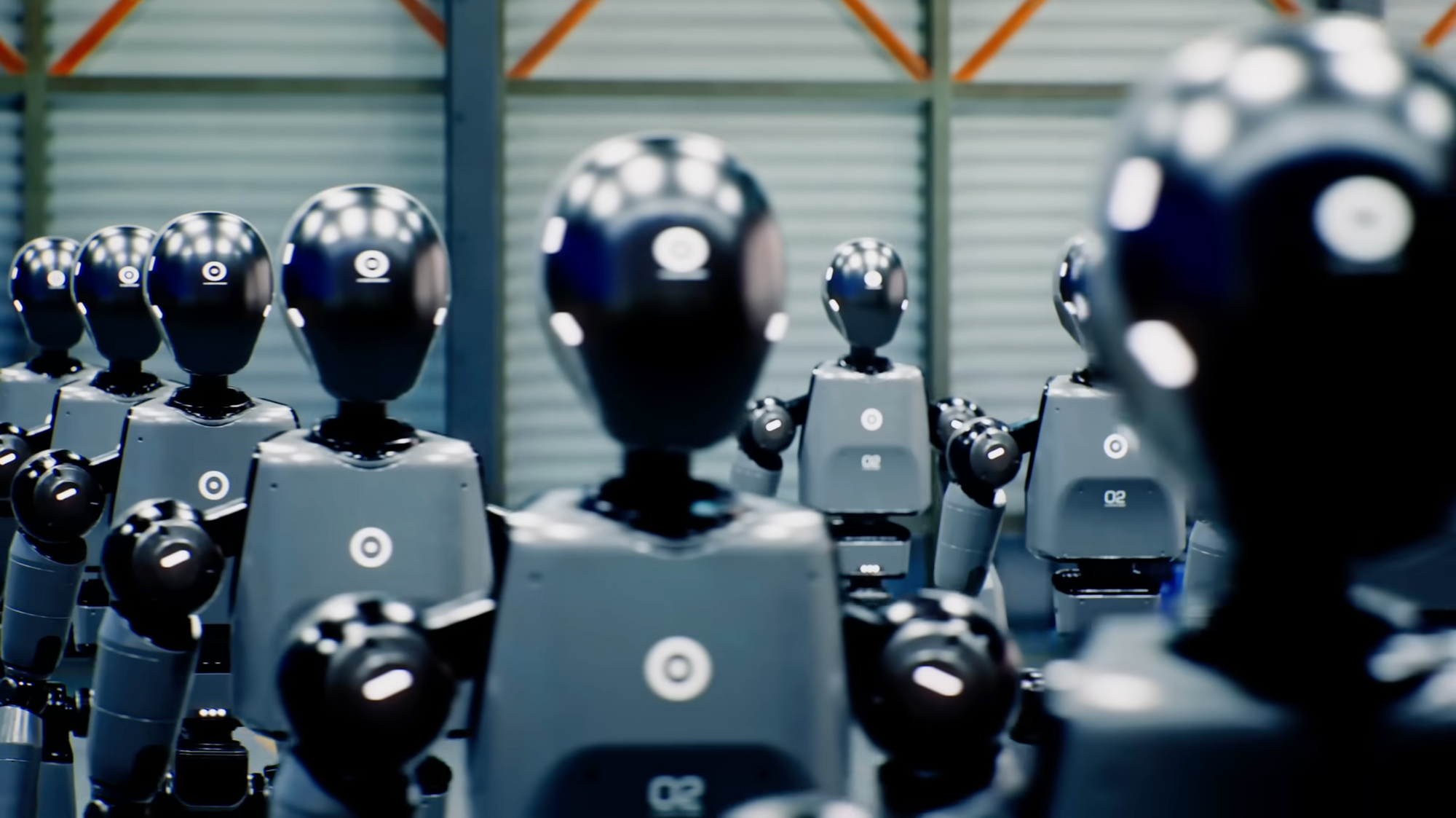
“The AI Doc: Or How I Became an Apocaloptimist” (⭐ ⭐ 1/2, premium $19.99 rental on Apple TV, Prime Video, and Fandango at Home)