The Best Movies of 2025
Ten great movies (and a baker's dozen of very good runners-up) for a pretty bad year.

I usually start my annual Best Of list with a long-ish essay on the state of cinema and, by extension, the world, but I’m not really feeling it this year. Maybe it’s the age, maybe it’s my age; whatever, it’s hard to insist on the importance of movies when your country is sinking into the quicksand of totalitarianism with each passing day. Yet it’s what I do, so, like most of us who feel caught in the amber of our own powerlessness, I keep on doing it. That includes writing reviews and commentary in this newsletter, for much of the year in the Washington Post (until they scrapped their entire freelance budget) and elsewhere. (Expect some announcements in this space in the new year, by the way – one definite and soon, one hopeful and a little further out.)
Did you go to some No Kings rallies this year? Good for you, and so did I, and let’s hope in 2026 we achieve the mass momentum to push the sons of bitches out, either via the ballot box, or, if it actually, finally comes to it, in the streets. (I'm not so naive as to think they’re going to leave willingly, so I don’t see how else it’s going to play out. Unless the Orange One actually does keel over and the threat somehow dissipates into smoke like Sauron’s outstretched hand. I’m not holding my breath.) But, hey, one battle after another, right?
Okay, okay, the movies. Here’s my 2025 list, ranging from the hugely ambitious (#1 and #5) to the pleasingly concise (#4 and #7), from the commercial (#9) to the iconoclastic (#8), and from warm human comedy (#6) to blistering sociopolitical farce (#3). Some of these films gave us permission to flee reality for a few hours, while others forced us to examine reality more closely under the guise of entertainment. Both approaches are necessary, of course, but only one of them is mostly whistling in the dark. May we start to turn the lights on in 2026.
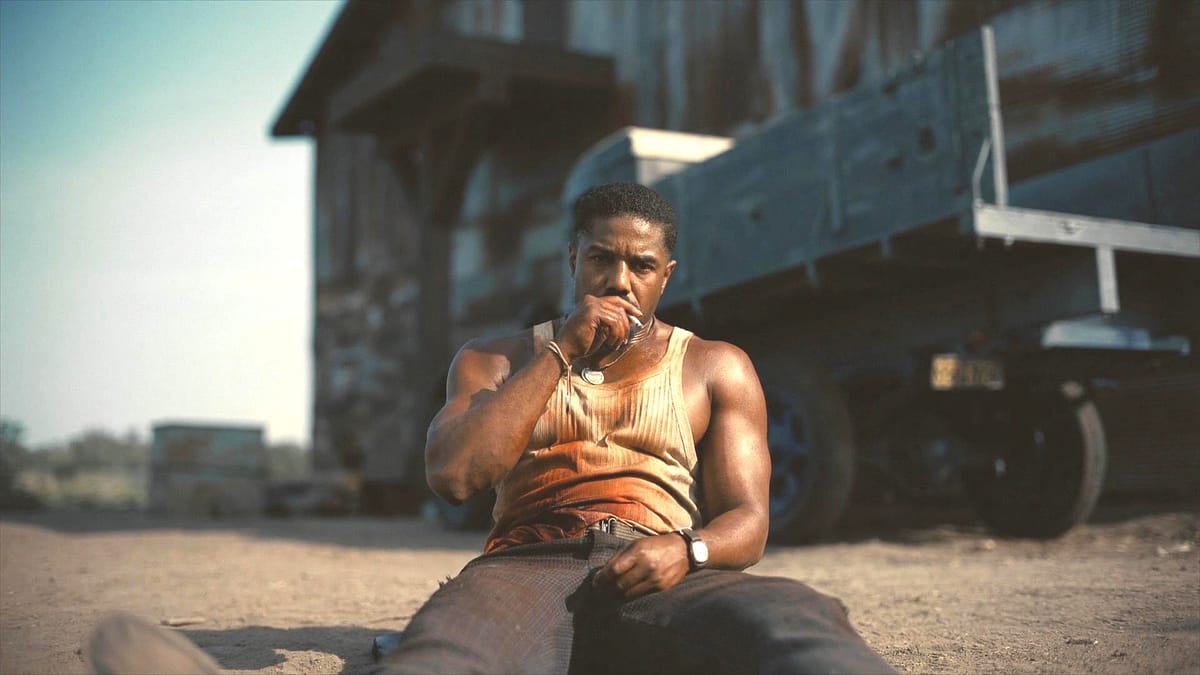
1. “Sinners” – It’s the kind of movie to make a Hollywood studio head quake in his boots: A history lesson, a horror movie, a musical, a sociocultural essay, a blockbuster smash – and the only one of the year’s top ten box office champs to work from an original screenplay, unbeholden to any franchise except the ongoing American experiment in all its disasters and joys. After reverse-engineering “Rocky” for the “Creed” movies and investing the Marvel universe with Black excellence in the “Black Panther” films, writer-director Ryan Coogler ascends to a higher plane of assured, exuberant filmmaking, re-imagining the Mississippi Delta of the 1930s as a place where twin bad-boy brothers Smoke and Stack (both played brilliantly by Michael B. Jordan; one grins, the other doesn’t) turn the Great Migration on its head and come South to share their musical birthright with the folks back home. A superb ensemble cast suggests a gathering of spirit and strength, and the juke joint the brothers build becomes a stage where the rhythms of the Mother Country take on fresh defiance, flowing out of the past and flowering into the future. That scene in the middle of the movie – you know the one – was one of two cinematic moments this year where I could feel my soul leave my body and join with everyone else in the theater and onscreen, and isn’t that why we’ve danced around the campfire for tens of thousands of years – to become one yearning mass? And isn’t it for the communion that we tell stories?
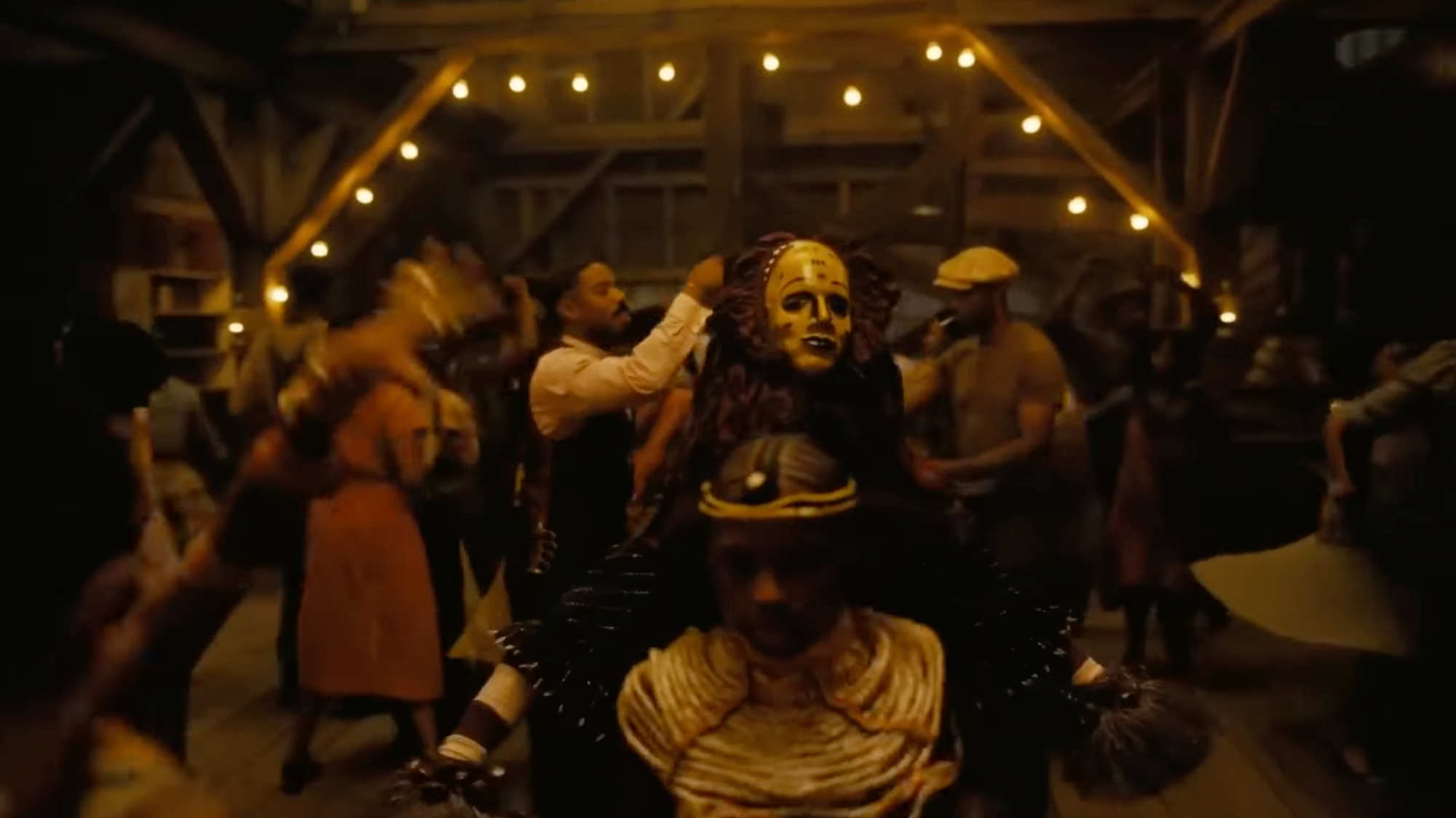
But, yes, the vampires. “Sinners” is a movie that places immense value on the art and expression that rise from a people – an oppressed people, specifically – and that remains deeply resistant to the idea of the oppressor taking some of that jam for himself. As I wrote when I reviewed the movie back in May, “Coogler's speaking in the language of the parable and the midnight morality tale, and he's not delivering a TED talk. … coursing along beneath everything like a bright red river is the needed reminder (oh, let’s call it a fact) that the art(s) that came up and through slavery, that warped themselves to injustice and pain and the heady immediacy of juke-joint release, and that ultimately were absorbed by the enslavers as their art(s) and sold to the world as such – those arts belong to the people who suffered to create them, and all else is vampirism.”
Take that, Elvis; take that, Clapton; take that, Macklemore. You want to argue? Make your own damn movie; this one moves like a bullet, keens like Robert Johnson, howls at the moon like Chester Burnett and laughs in the face of an undead immigrant white man (Jack O’Connell) hungry for soul music to fill the hole in his chest. That “Sinners” is so absurdly entertaining on its surface and so profound beneath was not lost on the millions who saw it and couldn’t stop talking about it, but it does represent a threat to the entertainment industry’s preferred mode of business, which is too often the strip-mining of authentic Black expression and selling it like cream cheese to the rest of the world. Even more daringly, the movie gently – and then not so gently – asks white audiences to consider how much of their cultural birthright is borrowed if not stolen and, at the very least, to recognize and pay honor to the suffering entwined deep in the DNA of the music they love. That we love; that I love: “When I got home [from the movie]” I wrote last May, “guitars and brimstone ringing in my ears, I put on a ‘history of the blues’ playlist I made a few years back, music that touches me with a power I don't get anywhere else. And when I looked in the mirror, I no longer saw my reflection.” In “Sinners,” we have met the vampire, and the vampire is us. (Streaming on HBO/Max, $3.99 rental on Amazon, Apple TV, Fandango at Home and Plex)
2. “Hamnet” – My other out-of-body experience at the movies in 2025? The scene toward the end of Chloé Zhao’s aching adaptation of the Maggie O’Farrell novel, when Jessie Buckley’s Agnes impulsively reaches out in her grief to comfort the young actor onstage playing Hamlet (Noah Jupe), and the entire Globe Theatre audience behind her stretches forward in a moment of communal mourning and release. She and we have gone through hell to get to that point, and I know people who won’t go see “Hamnet” because it involves the death of a child. Perhaps they’re right; the scene in question is brutal, in part because we’ve become as attached to young Hamnet Shakespeare (a sweet, smart, present-tense Jacobi Jupe) as his mother and faraway father. “Shakespeare in Absentia” might make a good alternative title for this movie, but “Hamnet” is really just tangential to the Bard (Paul Mescal, decent and hapless as Will) and more concerned with the vitality that courses through his wife, sprung from the earth itself like the Tree of Life – Zhao is nothing if not a student of Terrence Malick – and experiencing in real time what her husband can only transmute into art. In fact, this movie hints that artists may be our necessary cowards, making universal what they’re uneasy or unable to feel as individuals, and through that cowardice – the despair William Shakespeare rerouted through the Prince of Denmark – offering not a way out of suffering but a way to shoulder it and share it and lighten the load. The paradox of the final scenes of “Hamnet” is that Agnes comes to the Globe thinking Will’s new play will be about their dead son when it’s really about the wonder and loss of our ever being here at all. (In theaters)
3. “It Was Just an Accident” – An unforgettable black comedy of life under Iran’s iron rule, made by a filmmaker who knows whereof he speaks. A woebegone garage mechanic (Vahid Mobasseri) kidnaps the man (Ebrahim Azizi) he thinks was his government torturer, but maybe it’s just some random guy with a squeaky prosthetic leg – the mechanic was blindfolded in prison, so who knows? Stuffing the man in the back of his van, he drives around Tehran, collecting other survivors of state torture and soliciting their opinions: A new bride (Hadis Pakbaten), a pragmatic photographer (Mariam Afshari), a hothead (Mohammad Ali Elyasmehr) who just wants to kill the victim and be done with it. A wry, bighearted meditation on both the urge for and the futility of revenge, it’s director’s Jafar Panahi’s finest work by far since emerging from a government ban on his filmmaking – and it promptly resulted in a new prison sentence in absentia while Panahi was in the US promoting the film. A must-see; you come away prizing Afshari as the fierce, calm conscience of “It Was Just an Accident” while considering what an American remake about ICE would look like – and how long it will take until we get it. ($9.99 rental on Amazon, Apple TV, Fandango at Home and Plex)
4. “Eephus” – Suh-wing, batter, batter, batter. From the sublime to the sublimely ridiculous: Two teams of middle-aged men playing their last ballgame as twilight falls. Carson Lund’s debut feature is a honey of local observation, set in a semi-fictional Douglas, Massachusetts, in a local ballpark about to be torn up for a new middle school. There’s no plot other than the game and the banter on the field and in the dugout, yet all the characters come alive as individual portraits of eccentricity and grace. Just as baseball itself is a game where nothing happens until it does, so “Eephus” – the title comes from a trick pitch that can bamboozle a batter or blow up in a pitcher’s face – revels affectionately in the way men bide their time with insults and minutiae until it’s time to catch a pop-up or throw a man out at third. Anyway, Lund knows it’s in the nothing-happening that the real stuff happens: the patter, the process, the wheels of the innings turning in sync with the planet. A lovely little movie, and one wise enough to bring the tattered king of the eephus, former Red Sox pitcher Bill “Spaceman” Lee, in for an inning to show how it’s done. (Streaming on MUBI, $2.99 rental on Amazon, Apple TV, Fandango at Home)
5. “One Battle After Another” – Sprawling and uncontainable where “Eephus” is compact, Paul Thomas Anderson’s remix – reinvention? regurgitation? – of Thomas Pynchon’s 1990 novel “Vineland” carries a simple message at its heart: Perilous times are upon us (did they ever leave?) and it’s up to the next generation of revolutionaries to pick up the standard and carry it into the field, since the old guard (that's us) is too high or too exhausted to remember the secret password. That it all plays out as a deadly serious farce of mismatched characters, conspiracies, Santa Claus cabals and panic in the streets is just PTA maximalism at its most wayward and entertaining. There’s a performance for everyone here: Sean Penn’s Al Capp cartoon of a fascist army nut, Teyana Taylor as a pregnant Black freedom fighter off a Maoist propaganda poster, putative star Leonardo di Caprio doing pure stoner-dad slapstick, a delightful Benicio del Toro underplaying his way to a supporting Oscar, and the rapturously normal Chase Infiniti as the kid – and the kids (you may have heard) are all right. There’s enough action here to qualify this as a thriller – oh, that roller-coaster desert chase scene at the end – but this is a reminder as our nation stumbles its way to its 250th birthday that America has never actually made good on its promise of freedom for everyone and that the long struggle to get there is – well, check the title. (Streaming on HBO/Max, $9.99 rental on Amazon, Apple TV, and Fandango at Home)
6. “Sentimental Value” – A phenomenally well-acted, quietly overpowering family saga of narcissism, sibling rivalry and suicidal depression – but it’s Norway, so everyone’s polite. It’s that passive-aggressive reserve that gooses the drama, though – an engine of longing and resentment pushing the characters toward conciliation whether they want it or not. Everyone around the table has their say: Renate Reinsve is getting the lion’s share of the praise as the troubled actress Nora, and her stage fright at the start of the movie is a hair-raising bit of acting and filmcraft, but Stellan Skarsgård quickly hijacks the film as her film director papa, a legend in his own mind, and then the translucent Inga Ibsdottir Lilleaas assumes center stage as Nora’s blessedly sane younger sister, Agnes. (Elle Fanning does well with the tricky role of a famous film star who’s not quite the actress she would like to be.) Director-cowriter Joachim Trier (“The Worst Person in the World”) summons the spirit of Ingmar Bergman in ways obvious and not so, but at the end of the day he’s more interested in the sighs and whispers of family (dis)harmony than in the mystery of God’s silence. Sentimental? Maybe a little, but you can’t say you weren’t warned. (In theaters)
7. “A Little Prayer” – I’ve spent half the year plugging Angus MacLachlan’s heartland drama as the little movie that could, and I urge you all to see it if only to lay a laurel at the feet of the great David Strathairn as a troubled, soft-spoken North Carolina family man who finds his tidy world crumbling beneath his feet. His character’s relationship with his daughter-in-law, played with cornflower simplicity by Jane Levy, is at the heart of the film – two kind people dismayed by the selfishness of others and coming to an awareness of their own frailty in the process. MacLachlan splices genetic material from the humanist masters of Japanese cinema – Ozu’s “Late Spring” (1949) and Naruse’s “Sound of the Mountain” (1954) are clear reference points – but “A Little Prayer” roots its fatalism in a dashed complacency and a growing awareness of human folly that feels uniquely American. A nearly perfect film, with a final scene that can wreck you with its sorrow and decency. ($5.99 rental on Amazon, Apple TV and Fandango at Home)
8. “Train Dreams” – When I saw this epic of an unimportant man’s life at Sundance in January, I and other hardened critics stumbled out of the theater in tears of gratitude. Yet when I watched it on the small screen with friends a few months later, they promptly fell asleep, and I just ran into a woman at a Christmas party who couldn’t believe I was putting this incredibly boring movie in my year-end Top Ten. Which only proves that A) some movies are better experienced in the dark church of a movie theater than at home on Netflix while you’re scrolling through Facebook, B) if you run into an obvious art film, you’d best slow down and treat it as such (or just change the flipping channel), and C) if you’d read this damn newsletter, I could have set your expectations the way a movie critic is supposed to. Directed by Clint Bentley from a 2011 novella by Denis Johnson, the film’s a history of the closing of the American frontier as experienced by Robert Grainier (Joel Edgerton), a taciturn logger, railway worker, husband, father, survivor, hermit, anonymous saint. William H. Macy has a few scenes as a loquacious old fellow in the logging camps, and through him, as through Grainier, one feels the resilience of small humans in an immense and unforgiving landscape, plus a hard-won awareness of the connections that undergird everything. With patient narration by Will Patton and music by Bryce Dessner of The National, the movie carries some of the wisdom and regret of “A River Runs Through It” – some of the same landscapes, too. I say turn off the lights, stash the smartphone, pull up a chair and give it a go, because if you’re in the proper state of mind and metabolism, “Train Dreams” can leave you feeling cleansed. (Streaming on Netflix)
9. “Weapons” – The best horror movie of the year, not because it featured the most original kills or best exploding guts (it doesn’t) but because writer-director Zach Cregger (“Barbarian”) starts with a solid hook – 17 schoolchildren have mysteriously vanished from a small town – and builds suspense through multiple narrators, sharp left turns, creeping dread and an uncanny sense of where horror and hilarity intersect. Of the new crop of genre mini-masters, Cregger is the one who most seems to have absorbed Hitchcock’s gift for tension and release, unease and surprise. In the bargain, “Weapons” re-establishes one of the finer character actresses of the 1980s as a nightmare from the collective unconscious and George Harrison’s “Beware of Darkness” as a soundtrack for midnight dread. Plus, you’ll also never look at a potato peeler the same way again. One big caveat: What was a terrific scream-and-laugh carnival ride in a crowded Friday night movie theater may play very differently in the quiet of a home screening room. There's only one way to find out, right? (Streaming on HBO/Max, $6.99 rental on Amazon, Apple TV, Fandango at Home and Plex)
10.“The Perfect Neighbor” – I short-shrifted documentaries this year for reasons beyond my immediate understanding (or maybe not, given the headlines), so there’s a lot I should have seen but didn’t, including that five-hour Russian film (Part 1!) about women journalists fighting state suppression. I promise I’ll get to that one, but until then Geeta Gandbhir’s scalding portrait of a Florida neighborhood tragedy will have to do. Told entirely through police dashboard and body cams, “Neighbor” chronicles an escalating series of complaints by one Susan Lorincz about noisy children and teenagers playing next to her house that culminated in her fatally shooting one of the kids’ mothers, Ajike Owens, through the door of her house in 2023. It’s the ultimate Karen nightmare, the logical result of a culture that encourages people to buy guns and then tells them to be scared of other people – Black people especially. The most ruthlessly revealing scene? When Lorincz is informs she’s under arrest and refuses to acknowledge the reality of a situation that just isn’t supposed to happen to people like her. (Streaming on Netflix)
Runners-up, in alphabetical order (titles link to trailers):
“Black Bag” – Another taut, tiny winner from Steven Soderbergh: Marriage as a series of CIA double-crosses, with Cate Blanchett and Michael Fassbender working the corners. (Streaming on Prime Video, $3.99 on Amazon, Apple TV, Fandango at Home and Plex)
“Bugonia” – Regardless of how you feel about le cinema du Yorgos Lanthimos, this duel of wits and acting between Emma Stone and Jesse Plemons is hard to resist. ($19.99 rental on Amazon, Apple TV, Fandango at Home)
“No Other Choice” – Park Chan-wook, the fiendish amoralist of South Korean cinema, translates a Donald Westlake novel about a homicidal job-seeker into a jaundiced serving of Seoul food. (In theaters)

“Nouvelle Vague” – One of two 2025 movies from busy Richard Linklater, this love letter to Jean-luc Godard and the making of “Breathless” is a fan’s notes, nothing more but certainly nothing less. (Streaming on Netflix)
“Pee-wee as Himself” – Shot in the months leading up to Paul Reubens’ unexpected death (even director Matt Wolf was kept in the dark), this is the final testament, delivered straight to the screen with dark and knowing humor, of a man who hid from himself in the closet of his greatest creation. (Streaming on HBO/Max, for purchase on Amazon and Apple TV)
“Pavements” – In a year chock full of bio-docs, musical and otherwise, Alex Ross Perry’s mischievous ode to the pioneering indie rock band Pavement stood out for its mixture of truth, parody and utter shambolic inspiration. (Streaming on MUBI, $3.99 rental on Amazon, Apple TV, Fandango at Home)
“Peter Hujar’s Day” – Ira Sachs (“Passages”) recreates a December 1974 interview between downtown photographer Hujar (Ben Wishaw) and writer Linda Rosenkrantz (Rebecca Hall). A faded era comes back to life in all its beautiful banality. (In theaters)
“Resurrection” – Four days after watching it, I’m still in a trance from Bi Gan’s multi-chapter fantasia, a sci-fi film noir love story told through a cascade of delirious imagery. (In theaters)
“The Secret Agent” – Brazil’s Kleber Mendonça Filho ups his game with this quixotic political thriller about a professor (a charismatic Wagner Moura) on the run in 1970s Brazil. (In theaters)
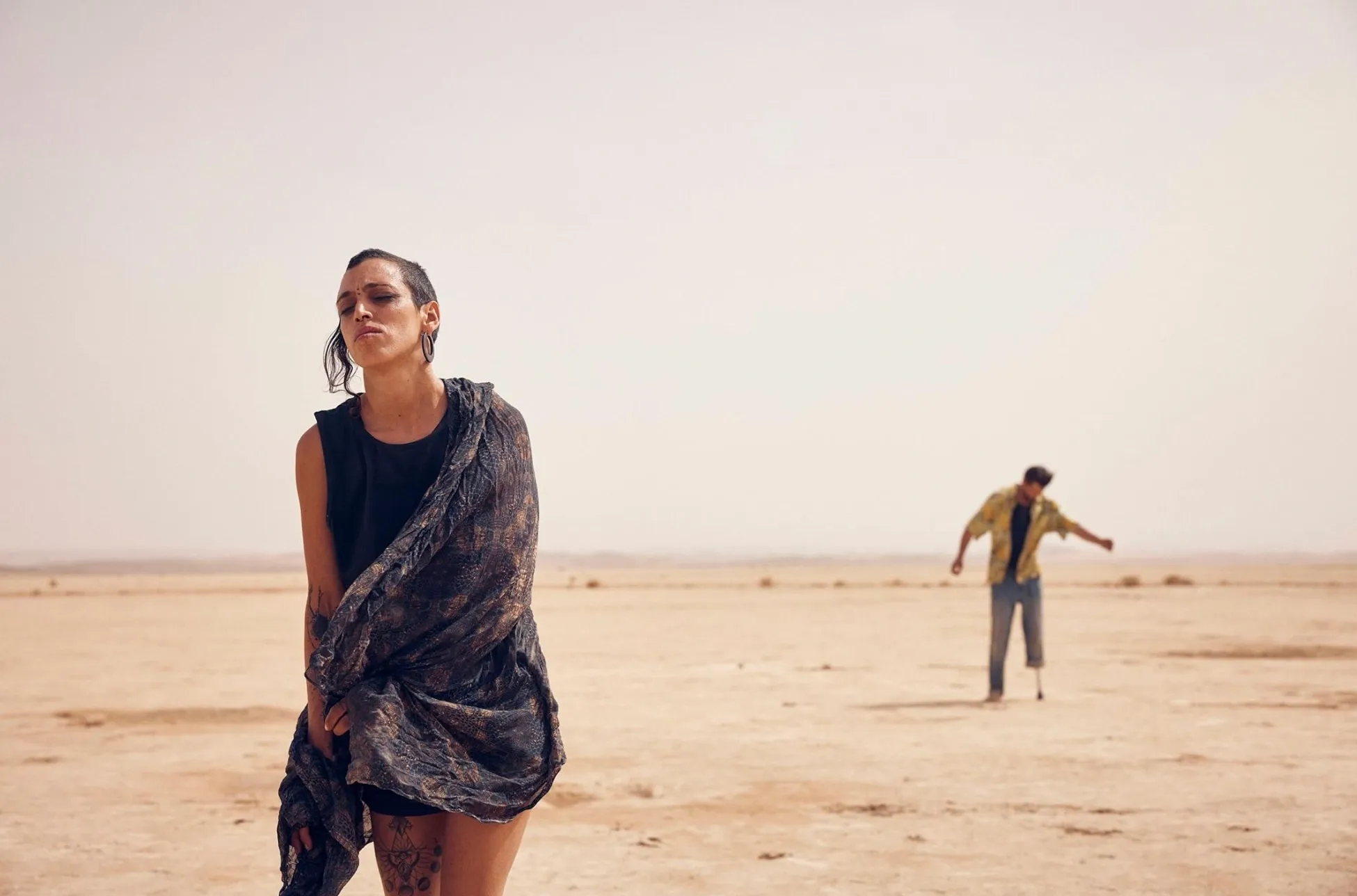
“Sirât” – A journey across the Moroccan desert becomes an existential obstacle course in Óliver Laxe’s intense drama. (In theaters)
“Sound of Falling” – Four generations of women experiencing trauma and transcendence in one German farmhouse over the decades; filmed by Mascha Schilinski with an astonishing array of filmmaking techniques. (In theaters)
“Sorry, Baby” – An impressive debut from writer-director-star Eva Victor, dramatizing a young woman’s post-assault struggles with humanity and a surprising amount of survivor’s humor. (Streaming on HBO/Max, $5.99 rental on Amazon, Apple TV, Fandango at Home and Plex)
“The Testament of Ann Lee” – Just your basic foot-stomping musical biopic of the founder of the Shakers, with a startling lead performance by Amanda Seyfried, bravura direction by Mona Fastvold and a lot of 17th-century New Englanders speaking in tongues. (In theaters)
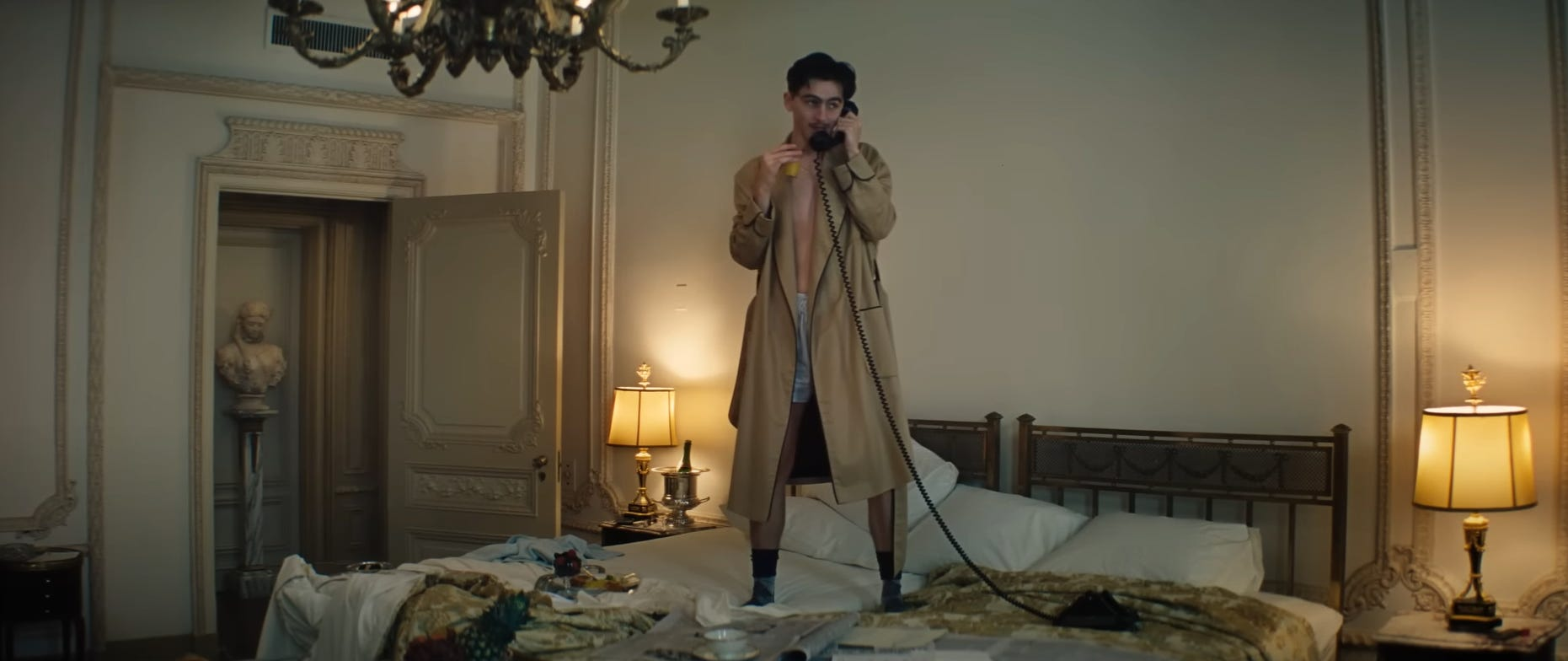
Movies I liked but not quite enough to make this list; your mileage may vary: “Blue Moon,” “Caught by the Tides,” “Familiar Touch,” “Frankenstein,” “Highest 2 Lowest,” “If I Had Legs I’d Kick You,” “Marty Supreme,” “The Mastermind,” “Misericordia,” “Secret Mall Apartment,” “Souleyman’s Story,” “Wake Up Dead Man: A Knives Out Mystery.”
Movies I should have seen if I was doing my job right but didn’t (maybe in 2026): “Christy,” “Die My Love, “Eddington,” “Friendship,” “Hedda,” “The History of Sound,” “The Life of Chuck” (so sue me).
The movie I wish hadn’t seen at all: “The Phoenician Scheme"
Feel free to leave a comment or add to someone else's.
Please forward this to friends! And if you’re not a paying subscriber and would like to sign up for additional postings and to join the discussions — or just help underwrite this enterprise, for which the author would be very grateful — here’s how.