Going Underground
The news industry is in crisis. We need something new. A modest proposal.

It is time to start thinking about alternate networks of information and entertainment. Sources untainted by algorithms and the thirst for our data, by profit and power as ends in themselves, by fealty to whoever threatens that power rather than to the consumers they serve. I understand that the corporations through whose outlets almost all of us learn about what’s happening in the world are tainted, profoundly, increasingly. That is why we need to build something new: A decentralized underground railroad of news and narrative.
No, I don’t know how that’s going to work. But I know the will is there, and the technology, and an army of people so disgusted with the current state of affairs that they have fled or been fired from the media oligarchy, or they still work there but with their morale beneath the floorboards. I know there’s a desperate hunger among readers and consumers for information that hasn’t been coopted by institutional quislings.
If you hadn’t noticed, we are drifting into an era of state-run media, in practice if not in name (and who knows how long it will be before that happens).
It started with certain news outlets and their owners caving to the Trump regime: The L.A. Times, CNN, CBS, “60 Minutes,” the Washington Post (yes, I know, I freelance for them), et al. The New York Times is still owned by the Sulzberger family, but, under the auspices of A.G. Sulzberger and executive editor Joe Kahn, it has made its bid to sit at the knee of power in Washington and New York City and seems deeply uninterested in covering the fall of the American democratic experiment as it happens in real time. If you want to know who really “owns” the Times – which power base the paper caters to – just look at its comical attempts to shiv the extremely popular Democratic Socialist mayoral candidate Zohran Mamdani.
In short, anyone who still believes in the myth of the “liberal media” should have their head examined.
The murder of Charlie Kirk – which I'm supposed to say is a terrible thing and I will, because it is a terrible thing – has brought all the weevils out into the open, with institutional mouthpieces from the Times’ Ezra Klein to the editorial board of my old employer the Boston Globe issuing paeans to the dead man’s commitment to open debate – a commitment that is nonsensical to anyone who has bothered to read what Kirk said, who he attacked and who he wanted to violently wish out of existence. (Here you go.) The forces of MAGA in state and federal government, meanwhile, are using Kirk’s death as the cudgel they’ve been hoping for to crack down on dissent in the name of “free speech.” Really.
The corporate cowardice has been astonishing to witness, from MSNBC firing senior political analyst Matthew Dowd after he noted Kirk’s rhetoric may have played a part in his death to the Washington Post summarily canning op-ed columnist Karen Attiah for one Bluesky post quoting a racist Kirk statement. (Her firing leaves Washington D.C., a majority Black city, without any Black opinion writers.)
It's not just in the news media, of course. The country is currently undergoing a paroxysm of self-righteous cancellation, a witch hunt that dismisses workers, professors, elementary school teachers – anyone who publicly considers that the dead man may not have been a paragon of democratic virtue. In short: You had better praise Charlie Kirk as a shining example of the American right to speak your mind, or we will run you out of town and your job on a rail.
It's mostly a cover, of course, to get everyone in line with the ruling administration, and it extends to any entertainment figures daring to talk back. CBS announced it was cancelling “The Late Show with Stephen Colbert” once its contract runs out in a year, despite the fact that it’s the highest rated of all the late-night shows. And yesterday, ABC bowed to pressure from affiliates and put “Jimmy Kimmel Live!” on indefinite suspension for the crime of “controversial” comments about Kirk (but really it was for the jokes slagging President Trump.)
The affiliates yanking ABC’s chain were the Sinclair Broadcast Group, long recognized as an arch-conservative network with stations in small markets across the country, and NexStar, which has a $6.2 billion deal in the works to buy Tegna, another local TV operator, and needs the approval of the FCC, whose MAGA chairman, Brendan Carr, has announced he might be putting broadcast licenses under review to make sure they’re operating “in the public interest.” The cherry on top: Sinclair will run a special memorial program in Kimmel's timeslot on its stations.
So, to recap: A combination of greed, political ass-kissing, demagoguery and cowardice is leading us to an era of state-run media in fact if not in name. (And forget about the old state-run media, PBS – it’s just been shut down for using ”Sesame Street” to teach Marxism to two-year-olds.)
None of this is to discredit the reporters, columnists, editors and everyone else in the hard daily work of news gathering and dissemination, most of whom are beyond demoralized. These are my friends and colleagues, and they’re good people being forced to make decisions (or having them made for them) about whether they can continue in the careers that have defined their lives and values. But the product cannot be trusted anymore, and the majority of owners and CEOs have given up whatever pretense they may have once had about acting in our interests (yours, mine, the country’s). So where do we go from here?
I just talked about this with Kid #1, Ms. Medical Resident, who’s a progressive firebrand with an idealism that admixes with her cynicism to come out looking something like realism. As far as she’s concerned, all these news institutions, media corporations and networks are fossilized non-entities – up to and including NPR. She doesn’t use them and none of her generational peers do; as they've done with Facebook, Millennials and Gen-Zers have ceded traditional information gathering to their parents. Instead, they get much of their news in 30-second blurts on Instagram – which is about as decentralized as it gets but also as unreliable – as well as from subscription 'zines, Substack newsletters and other independent sources. “Aren’t you just fed the information that fits inside your bubble?” I asked her. Yes, she responded, but there’s no longer any source that doesn’t serve a bubble of some sort or another and most of them want to shake you down for money or data, so you’re best invested in curating your own feed.
For what it’s worth, most people under, say, 35 seem pretty limber doing just that. Both my adult kids are generally aware of what’s happening in the world, but it’s the news they don’t know they’re missing that they’re missing. Old men and women who yell at clouds – you and I, basically – remember the best thing about a physical newspaper, which is that you ended up reading stories you didn’t know you’d be interested in because they were right next to the ones that you were. The Internet killed that off and low-attention-span apps like Instagram and TikTok dug the grave. I personally use Bluesky as my generalized news feed, subscribing to a whole lotta different official and unofficial outlets, investigative reporters and muckrakers, and using them to drill down into news as it comes in. In other words, I've created my own ad-hoc news network because I feel I have to, but, as my daughter is quick to remind me, my BlueSky feed is a bubble like any other and maybe more so than most. But I'm not sure there is a single source to trust anymore outside of ProPublica. Or that there ever was, other than Edward R. Murrow and Uncle Walter Cronkite.
What am I suggesting? That it's the natural order of the universe for things to split into pieces as they decay and then come back together in new forms and that this applies to information as well as star clusters and entertainment companies. That there are enough refugees from the institutional outlets out there in Substack/podcast/newsletter land, as well as a wave of non-profit community newspapers, to think about how a new network might come about, one with a hive mind in place of a central hub. One that prizes independence from commercial pressures and delivery channels and favors blunt truth-telling over “balance.” That incorporates the next generation of digital news-blurt but anchors it within an ethics of newsgathering – which already exists! in many different forms! – and that examines those ethics to weed out the parts that no longer function as they should.
We can always look to offshore news sources, less beholden to Trump but dealing with their own internal and external tensions: The Guardian, BBC World News, Al Jazeera, Haaretz, whatever. And, no matter what happens, we need to beware of sources that purport to tell “the truth” but have a clear agenda warping what they report and how they report it, whether that’s Fox News or Bari Weiss’s Free Press, the last reportedly soon to be in charge of CBS News. In case you were wondering how that was going.
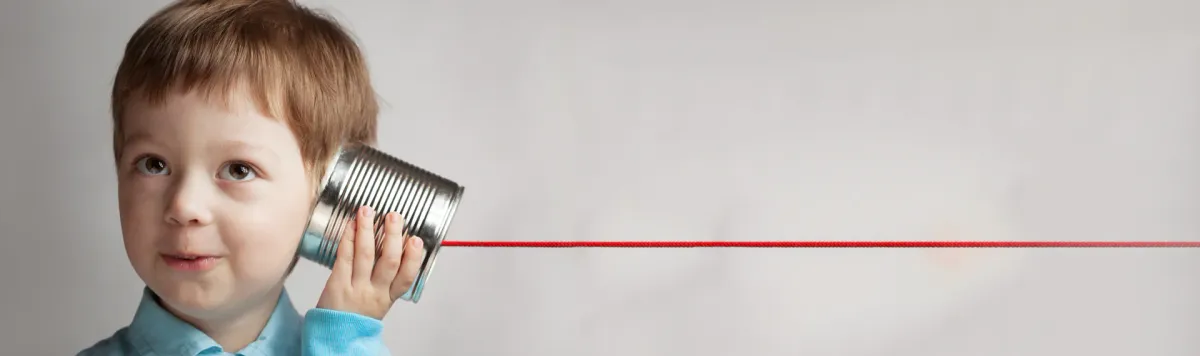
Where does this new network live that it can’t be coopted by state or market forces? Does it come to us through Signal? Via RSS Feed? Linked TikTok videos in a nightly download? Can we trust digital delivery at all or will we have to revert to physical means – a printed broadside landing on our doorstep, a town crier, two tin cans and some string? I know that sounds paranoid, but everyone who’s sounded paranoid in the last 10 years has been proven to be right, so take that as you will. Not all our news sources have gone to the dark side, but all of them are being bent to the rack and the groupthink is dangerous. (As for the entertainment conglomerates that own the networks and movie studios and streaming channels, the only thing they’ll feel is a pinch in the pocketbook – or regulation, they’ll feel regulation, but don’t expect that to happen any time soon – so if you can cancel your Hulu and Disney+ subscriptions, by all means feel free. And quit Facebook while you’re at it. Yeah, I know the birthday wishes are nice. The Russian trolls swarming every. single. political conversation, not so much.)
I'm also brokering the idea that our traditional sources of entertainment are failing us, certainly as regards the broadcast and cable networks. The classic movie studio model is broken, too, since it can only belch out rehashes of any given corporation's intellectual property like that polar bear swimming neurotically back and forth in the Central Park Zoo. Should we be making up our own shows and putting them on TV, like Bob and Judy in the old Talking Heads song? I think that's already what we're doing with TikTok and Instagram stories and podcasts and the rest. How that flowers into something larger is beyond my line of sight, but the history of any new technology is always that the public finds a use for it, sometimes in direct contradiction of what its creators envisioned, and that the forces of commercial consolidation will eventually catch up and seal it off. So what happens if we hold onto the reins as long as we can? What if we just walk away and start something new?
What am I suggesting? I really have no idea: I’m just a movie critic and I’m older than dirt. But I bet there are people out there with an idea or two or twenty of how it might work. Mistakes will be made. Initiatives will die out. Something will rise that we can use to restore a consensual reality to replace the fractured alternate planets of information and diversion in which we live and which are being used to bring a country to its knees. I don't know that we have any other choice if we want to remain free.
I normally talk about movies, but, as you can see, not always. Feel free to leave a comment, make suggestions, or add to someone else's.
Please forward this to friends. And if you’re not a paying subscriber and would like to sign up for additional postings and to join the discussions — or just help underwrite this enterprise, for which the author would be very grateful — here’s how.